



 Bandi e ConcorsiBandi di gara e contratti (al 12 luglio 2017)Avviso di preinformazioneITALIANOPagine
Pagine
Monitoraggio qualità ambiente marino
Monitoraggio e consulenze ambientali
Analisi di variabili ambientali e biologiche
Monitoraggio e consulenze ambientali
| Descrizione |
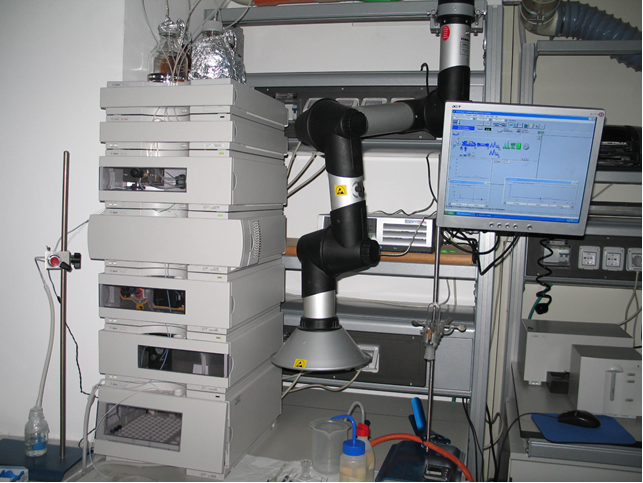
Le unità IRM e MAA possiedono una pluriennale esperienza nel campo del monitoraggio ambientale maturata in seguito alla partecipazione a numerose commesse esterne e progetti scientifici. L’attività consiste nella raccolta, analisi ed elaborazione dati finalizzata al trasferimento di relazioni tecnico-scientifiche ad istituzioni locali e nazionali o a soggetti privati. Vengono effettuati:
|
| Servizi erogati |
|
| Attrezzature utilizzate |
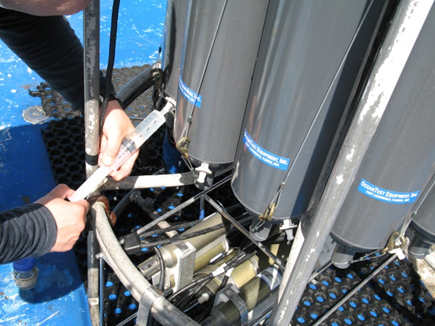
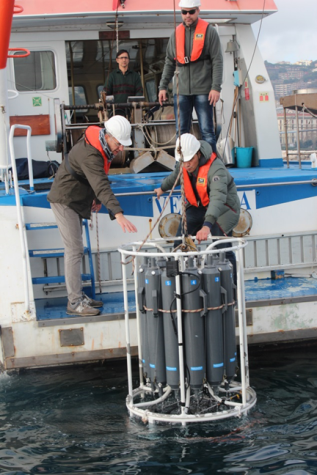
L’attività di campionamento e raccolta dati è svolta prevalentemente a bordo della M/N Vettoria o su altre navi oceanografiche. In alternativa, viene allestito un laboratorio mobile autosufficiente per il primo trattamento dei campioni in assenza di strutture di appoggio idonee. Le attrezzature utilizzate comprendono, per il lavooro di campagna:
E, in laboratorio: |
| Contatti |
Fabio Conversano Tel. + 39 081 5833357 e-mail: fabio.conversano(at)szn.it |
Rilievi idrografici e campionamento
Unità Infrastrutture di Ricerca a Mare
| Descrizione |
Acquisizione di dati idrografici, raccolta e pretrattamento di campioni di acqua da destinare alle successive analisi delle principali variabili fisiche, chimiche e biologiche. L’attività è svolta prevalentemente a bordo della M/N Vettoria o su altre navi oceanografiche. Inoltre, in assenza di strutture di appoggio idonee, è possibile allestire un laboratorio mobile completamente autosufficiente che consente di effettuare il primo trattamento dei campioni. |
| Servizi erogati |
|
| Attrezzature utilizzate |
Imbarcazioni oceanografiche equipaggiate Sonda multiparametrica e campionatore |
| Contatti |
Fabio Conversano Tel. + 39 081 5833357 e-mail: fabio.conversano(at)szn.it |
Personale Associato
Chair
Prof. Axel Meyer
Prof. Vincenzo Saggiomo
Dott. Graziano Fiorito
Alumni
Maria Grazia Mazzocchi
Marina Montresor
Maurizio Ribera d'Alcalà
Scipione Beatrice
Research Fellow
|
Aguzzi Jacopo Andrews Paul Bartoli Marco Boni Raffaele Caianiello Silvia Calò Antonio Cerrano Carlo Christiaen Lionel Crispi Stefania Donadio Carlo Faggio Caterina Feuda Roberto Fiorentino Fabio Giordano Daniela |
Iandolo Donata Iovino Nicola Mojetta Angelo Renato Rizzo Lucia Scipione Maria Beatrice Signorini Silvia Giorgia Swartz Zachary S. Taviani Marco Verde Cinzia
|
Updated on August, 2025
Microscopia Confocale e Bioimaging
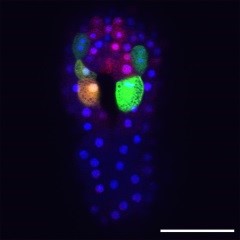
| Descrizione | L’Unità fornisce ai ricercatori tecniche aggiornate di microscopia ottica, elettronica, live cell imaging, microscopia confocale, microscopia 3D e 4D per la comprensione della struttura tridimensionale e i componenti subcellulari. |
| Servizi erogati |
- Assistenza tecnica agli utenti dei microscopi confocali - Assistenza tecnica agli utenti del microscopio a epifluorescenza corredato di sistemi di acquisizione di immagini - Consulenza per l’applicazione delle tecniche di microscopia ottica e confocale - Consulenza sull’analisi digitale delle immagini ottenute dalle osservazioni al microscopio - Formazione sull’uso delle attrezzature. |
| Attrezzature utilizzate |
- Microscopio Confocale Zeiss LSM 510 - Microscopio confocale Zeiss LSM 700 |
| Contatti |
Elio Biffali Tel. +39 081 5833 298 e-mail: elio.biffali(at)szn.it |
Microscopia Elettronica
| Descrizione |
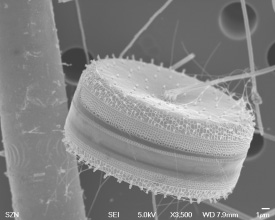
L’unità AMOBIO fornisce un servizio di alta qualità per la preparazione di campioni per l’osservazione al microscopio elettronico a trasmissione (TEM) e scansione (SEM). Consulenza scientifica per l’applicazione delle tecniche di microscopia elettronica |
| Servizi erogati |
- Fissazione, disidratazione, inclusione in resina - Taglio sezioni semifini seriali - Taglio sezioni semifini e fini - Trattamento al Critical Point Drying per analisi al SEM) - Metallizzazione-Sputtering (per SEM) |
| Attrezzature utilizzate |
- Microscopio Elettronico a Trasmissione (TEM) ZEISS LEO 912 AB - Scarica il Manuale |
| Contatti |
Elio Biffali Tel. +39 081 5833 298 e-mail: elio.biffali(at)szn.it |
Ovothiol, a marine antioxidant: discovery of its biological activities
Department of Biology and Evolution of Marine Organisms
Director of Studies: Anna Palumbo
Project Summary/Abstract
The marine environment is characterized by a high biodiversity of species, which accounts for the enormous chemical diversity representing a great potential source of bioactive molecules. There is a great interest in exploiting the biological properties and biotechnological applications of marine compounds, as molecules with antioxidant activities. Among these, a new class of sulfur-containing amino acids, thiohistidine derivatives, termed ovothiols, was isolated and characterized from sea urchin eggs in the eighties at the Zoological Station. Recently, the enzyme responsible for the first step of its biosynthesis, 5-histidylcysteine sulfoxide synthase (Ovo), has been characterized. In silico studies have revealed the presence of homologous Ovo enzymes in more than 80 genomes, ranging from proteobacteria to animalia, suggesting a variety of roles played by this metabolite. Interestingly, ovothiol has been shown to be a promising pharmacological compound, being active on cancer cells and as neuroprotectant. The main objective of this study is to investigate, through a multidisciplinary approach, spanning from developmental biology to algal physiology, the biological activities of ovothiol in two different marine organisms inhabiting coastal seas, as the invertebrate sea urchin and microalgae from the diatoms’group.
The ability of diatoms, target species already studied and cultivated at the Zoological Station, to activate antioxidant activities expressing Ovo will be investigated in laboratory under different stress conditions and growth phases. In parallel, the involvement of this metabolite in stress response of the sea urchin Paracentrotus lividus will be examined exposing developing embryos to a series of chemical and physical stress agents and monitoring Ovo expression and ovothiol formation, using protocols already established in our group. Gene perturbation experiments will be performed on sea urchin and diatoms to assess the functional significance of ovothiol formation in both organisms.
Intellectual Merit
The proposed project will expand the knowledge about the biological properties of a marine natural product which can then drive future applicative studies. The expected impact will provide a better understanding of the ecophysiological functioning of coastal ecosystem submitted to environmental stresses, targeting both the pelagic and benthic systems.
Moreover, results obtained on the ovothiol production by diatoms are of huge interest in a biotechnological context, allowing to produce this molecule at low cost.
Broader Impacts
The study of the biological properties of ovothiols has the potential to impact other fields, e.g. nutraceutical. The antioxidant properties of this class of compounds might be exploited in the formulation of nutritional supplements.
Role of Transposable Elements in the Evolution of Cellular Complexity
Department of Biology and Evolution of Marine Organisms
Director of Studies: Remo Sanges
Project Summary/Abstract
There is a battle going on in our genomes. This battle is present in an overwhelming portion of the tree of life. A transposable element (TE) is a genomic sequence that can duplicate itself in a different position within the genome. During a wave of transposition insertions, a specific TE invades a specific genome having a limited range of time to amplify itself until the assaulted genome evolve the epigenetic competence to silence it. This control is not always complete, some TE copies might retain limited activity to perpetuate their amplification. In this way they bypass their extinction as a consequence of the accumulation of mutations, but do not retain the potential to completely destroy the invaded genome. At this stage, TEs are defined "domesticated" and they should not be considered anymore mere barbarian parasites. A growing body of evidences suggests they should be better regarded as "symbionts". Indeed, although mutagenic, they provide fresh genomic matter that can be shaped by the host genome to evolve genetic novelties. The genomes of living organisms contain a high percentage of TEs. This can vary substantially among different species, but researchers are beginning to demonstrate that the more an organism is complex (it presents many different kind of cells), the higher is the percentage of such elements into the genome. Therefore, understanding the evolution of these elements would allow us to better understand how complexity evolved. We propose to develop specific bioinformatics pipelines to evaluate how these features of the genome are evolutionary related and how they shaped the eukaryotic genomes and complexity. This project departs from interesting outcomes recently gained in our research projects focusing around the sequencing of transcriptomes from diverse marine organisms and the development of related bioinformatics pipelines. Analyzing the genome and the transcriptome from many sequenced species, at different level of complexity, we aim at understand whether the expansion of TEs, in relation to the evolution of complexity, is a basic principle of biology. Finally, the better understanding of the evolution and the functional impact of these element is also important from a biotechnological perspective, indeed the unique characteristic of these elements, to specifically bind, edit and modify any genome, make them an attractive system for a vast repertoire of molecular applications.
Investigating the interplay between abiotic forcing and life strategies in setting marine plankton diversity
Department of Integrative Marine Ecology
Director of Studies: Daniele Iudicone
Project Summary/Abstract
This project will address the overarching question of how geophysical variability in time and space affects ecosystem diversity, focusing on oceanic plankton as a model system. A long-standing, as yet unresolved challenge---the "plankton paradox"---is to understand how phytoplankton maintain their observed rich biodiversity while inhabiting a relatively unstructured environment and competing for only a few resources. In fact, the local structure and function of their communities is organized by ocean circulation and resource delivery, together with organismal acclimation and adaptation. How these factors interplay to maintain ocean biomes is a key question of phytoplankton ecology, with important implications for the structure of marine food webs and climate. Specifically, we will bring together expertise in theoretical ecology, genomics and oceanography to explore how spatial-temporal variability in the environment may allow for the stable coexistence of many species in competition while favoring the establishment of new species. We will pay particular attention to the novel hypothesis that plankton do not always respond to high frequency environmental signals in order to competitively exploit environmental variability.
Marine biology is under-going a rapid and significant transition due to the availability of new, cost-effective molecular and bioinformatics tools. The recent Tara Oceans global survey provides one of the first, and certainly the most comprehensive survey of detailed molecular information and oceanographic context. Using an holistic approach, the work will focus on examining the environmental seasonality vs ocean circulation as factors shaping the diversity in real data (Tara Oceans) and in a hierarchy of models describing climate-plankton interaction at increasing levels of detail and realism. The combined expertise will allow to make informed, innovative modelling choices at each level of complexity and test the results against the observed distribution of species and associated traits. The simulations will inform future models of global scale organization of phytoplankton populations and their response to climate change. Specifically, by combining curated transcriptome datasets from key selected, evolutionarily distant organism groups with diversity analyses and tracking their dispersal across the oceans, we will develop models to test hypotheses on plasticity, adaptation, microevolution, speciation and collective processes in globally relevant unicellular communities.
As main intellectual merit, the interdisciplinary team of oceanographers, modelers and biologists will allow an innovative end-to-end (molecular mechanisms - organisms - communities) analysis of phytoplankton dynamics and the validation of hypotheses in well contextualized water masses. In turn this will inform conceptual models directly from data in addition to building up upon previous modelling exercises. Finally, the study of the impact of seasonality upon plankton will allow to bridge terrestrial and marine ecology to a point rarely reached before, with broad impact on the marine community. In addition, the evolutionary significance of overlooked traits and the dynamical balance with oceanic dispersal will inform new directions of theoretical and applied research.
From plankton to benthos and back: cues triggering formation and germination of resting stages in marine diatoms
Department of Integrative Marine Ecology
Director of Studies: Marina Montresor
Project Summary/Abstract
The formation of resting stages – i.e. stages capable to enter a reversible stage of reduced metabolic activity, or "dormancy" - is widespread amongst all organisms spanning from bacteria, to protists, animals and plants. This life cycle trait allows organisms to cope with environmental conditions sub-optimal for growth, seasonality of food availability and plays a fundamental role in shaping population dynamics. Resting stages form "seed banks" in marine sediments, where they can survive for long time, and subsequently germinate bringing back to the water column actively growing cells/organisms. The formation and germination of dormant stages is linked to the perception of external cues, whose mechanisms have been elucidated for higher plants and animals and partly for bacteria. However, information on these processes in marine microalgae is still limited.
The main objective of the project is to investigate the factors that trigger the formation and germination of spores in diatoms. Diatom spores are formed by subsequent mitotic divisions in which the highly silicified thecae are synthesized. Target species will be one species of the genus Chaetoceros and Leptocylindrus danicus, in which spore formation is linked to the sexual phase. Laboratory experiments suggest that spore formation is induced by nutrient starvation but field observations do not entirely support this observation. A detailed experimental set up in which e.g. both the external and internal nitrogen pools have been measured are however lacking. The main cue for spore germination is exposure to light. However, also on this aspect the information available is limited.
The backbone of the project will focus on the role of nutrient (nitrogen) concentration in inducing the formation of spores and on the role of light (both as quality and quantity) in inducing the germination of resting stages. The project will also include transcriptomic approaches on key time points/phases of the life cycle transitions to gain insights on the molecular mechanisms involved in the perception of the cues and in the physiological response.
The results of the project have ecological (insights on the cues triggering two key life phase transitions that have implications for e.g. bloom termination, inoculum of the water column upon germination, species succession), applicative (induction of spore formation may represent as a way to preserve strains over time) and evolutionary implications. Moreover, the molecular results will be important for the interpretation of meta-transcriptomic data gained in situ.


Copyright © 2015 by Stazione Zoologica Anton Dohrn Napoli - Italy
Villa Comunale, 80121 Napoli - Tel.+39 081 5833111 - C.F./P.IVA : IT 04894530635 - PEC: ufficio.protocollo(at)cert.szn.it