



 Bandi e ConcorsiBandi di concorsoPersonale Tecnico AmministrativoBandi scadutiITALIANOPagine
Pagine
Re-defining the concept of model species: an experimental approach on a range of marine animals
Department of Integrative Marine Ecology
Director of Studies: Valerio Zupo
Project Summary/Abstract
Model species are commonly adopted for investigations in various fields of biology and ecology, to test hypotheses and perform bioassays. However, only a few organisms are universally considered and the narrow list limits science to the answers that those organisms can provide. In addition, models are scarcely representative samples of biological diversity, being often chosen according to evolutionary constraints. It is time to think more critically about how we choose and use animal models. We propose to define a list of candidate model species chosen among a broad set of marine organisms and test their performances –in terms of efficiency to answer scientific questions- by means of a set of characters and bioassays. According to the results obtained, the value of each species, as a model organism, will be defined and ranked, to avoid the influence of personal confidence with peculiar taxonomical groups, that determined the choice of most model species up to date. In the selection of animal models, both classical systems (Ciona, Zebrafish, sea urchins) and new candidates will be considered and their performances will be compared. We will consider a broad assortment of animals, from polychaetes to vertebrates, in order to avoid limitations due to taxonomical constraints. The research will initially evaluate the possibility to rear, culture, reproduce each species by simple and cheap methods. Then, developmental biology, physiology, toxicology, chemical ecology and molecular ecology techniques will be applied to measure the answers of each species to a common set of scientific questions. Finally, the value of each model species will be determined by ranking them according to the previous measurements. The project has clear intellectual merits, since it aims, for the first time, at providing a comprehensive survey of candidate model species, compare them and re-define, through quantitative evaluations, the features best suited to express the usefulness of a species for answering a wide set of scientific questions. In addition, it will allow for testing natural products on a range of organisms and describing their mechanisms of action, with the possibility to develop novel biotechnologies. The research could have broad impacts on future investigations involving model species, by indicating canonical choices for given purposes, avoiding the adoption of model species based on scientist’s personal confidence or due to the simple availability in given geographical locations, as widely applied at present. The completion of these researches, in addition, will provide the student with a wide experience in key disciplines and techniques, as culture of marine micro- and macro-algae, devising of experimental automatized culture systems for animal models, extracting, analyzing and testing algal secondary metabolites, testing the effect of natural substances on various marine organisms, analyzing the histological effects of natural products as candidate drugs, disclosing the molecular effects of algal metabolites by means of micro-arrays. On the whole, the candidate will acquire a vast knowledge on the manipulation and culture of model species and this will obviously increase his/her possibilities to be quickly hired as a post-doc.
Multiple stressors response in the seagrass Posidonia oceanica
Department of Integrative Marine Ecology
Director of Studies: Gabriele Procaccini
Project Summary/Abstract
Despite their key ecological value, coastal ecosystems such as seagrass meadows are experiencing a progressive decline, due to a number of threats associated to human activities along the coastline, as well as climate changes. In the Mediterranean, the marine angiosperm Posidonia oceanica forms dense meadows, which provide important ecological functions and services, being crucial for maintaining the quality of coastal waters, for the cycling of nutrients, for stabilizing sediments and reducing shoreline erosion. The conservation of P. oceanica meadows has become a key objective on actual European environmental and water policies. They are protected at the European level, as a priority habitat (Habitats Directive, Dir 92/43/CEE and Directive 97/62/CE) and as a species (Bern Convention, Annex 1), and are under specific legal protection actions in several European countries. Policies aiming at improving quality of coastal waters and marine environments across Europe are also being developed in European countries (Water Framework Directive and Marine Strategy Framework Directive), recognizing the large potential of P. oceanica meadows as bioindicators of ecological quality. In this context, investigation of the effects of climate and non-climate stressors in P. oceanica became crucial, in order to determine both the physiological response, and the potential adaptive response of the species. Effects of single environmental drivers (i.e. light, temperature and CO2) have been studied in different seagrass species, both in natural and controlled conditions. Nonetheless, in natural environments, those drivers often do not act in isolation, but additive, synergistic or antagonistic effects can occur. This PhD project aims to investigate the effects of "multiple stressors" in Posidonia oceanica. The combined effects of pairs of factors (e.g. Temperature vs. Light; Temperature vs. CO2 and Light vs. CO2) will be investigated looking at the expression of target genes selected in previous single-stressor studies, via RT-qPCR. The photophysiological response will also be assessed looking at changes in the pigmentary pool, as well as characterizing the functionality and structure of the photosynthetic apparatus through chlorophyll a fluorescence measures. Changes in the morphology of the plants will also be considered in the project, as well as changes in some plant fitness traits. Finally, changes in the epiphytic community on rhizomes and leaves will be assessed in order to get an insight into potential indirect effects of stressors on P. oceanica. Experiments will be carried out in the new benthic mesocosm facility available at the SZN.
Project results will be useful for designing new management strategies of coastal resources in two different ways. First, allowing to move away from the impact-by-impact framework, to which management processes are strongly focused. Second, providing new generation of early warning indicators for environmental assessment.
Signal perception in diatoms: dissecting chemical communication with molecular approaches
Department of Integrative Marine Ecology
Director of Studies: Maria I. Ferrante
Project Summary/Abstract
Signal transduction mechanisms are extremely well defined in multicellular organisms and unicellular model systems such as yeast and Chlamydomonas but very little is known for phytoplankton. Yet, understanding how cells sense and integrate environmental signals is fundamental to explain population dynamics, community interactions and ultimately ecosystem functioning.
Diatoms, among phytoplanktonic organisms, are one of the most important and abundant groups and, because of the availability of genomic data and genetic resources for a selection of species, represent currently the most suitable system to approach molecular and functional studies.
Among the possible signals that a cell can send and receive, we have chosen to investigate the chemical communication during sexual reproduction in the pennate marine diatom Pseudo-nitzschia multistriata, a species for which we produced a reference genome and transcriptomes.
We undertook gene expression studies to investigate the pathways and gene networks used by diatoms to process the signals. The data revealed complex changes in gene expression of cells engaged in the initial phases of sexual reproduction. Importantly, we observed changes in the expression of genes well-characterized in animals or plants but so far scarcely or not at all described for diatoms.
This project aims at developing on these findings, providing further support to the hypothesis that specific signaling pathways well described in other systems are active in diatoms and are being used to process the reception of chemical cues (pheromones). This will be done by expanding the studies on gene expression, and by perturbation experiments, exploiting functional genomics techniques recently developed in the laboratory.
The data generated will allow to define gene networks in diatoms and to carry out comparative studies to identify specific and general characteristics of diatom responses to external stimuli.
Eventually, we will integrate the information obtained in the laboratory with metagenomics and metatranscriptomics data collected across the world’s oceans, such as data collected during the TARA Oceans expedition, strengthening the integration of environmental and experimental data.
Info & Admission - General Info
PhD Program Open University - Stazione Zoologica Anton Dohrn
Duration of Ph.D. Thesis & Financial Support
Students are expected to complete their thesis within three years, with the possibility of a fourth year without salary, to write up the thesis (should this be necessary). The gross salary is € 16.000,00 per year for three years from which taxes (approximately 18%) will be subtracted. Students are liable to an annual registration fee to be paid to the Open University (not to the Stazione Zoologica).
The Stazione Zoologica will cover the registration fee for three years.
Admission Requirements
Applicants must hold or be in the process of receiving (within November 28th 2022):
1. an advanced degree such as a Master of Science (M.Sc.) or its equivalent in a scientific area coherent with the project proposed;
and, where English is not the applicant’s first language,
2. an IELTS certificate (dated within the last two years) with scores that meet the minimum requirements of 6.5 overall score, and no less than 6.0 in any of the four elements (reading, writing, listening and speaking).
Alternative language certificate accepted:
- a degree completed either in the UK or in one of the majority English speaking countries listed listed below is also considered a proof of English proficiency:
• Antigua and Barbuda
• Australia
• The Bahamas
• Barbados
• Belize
• Dominica
• Grenada
• Guyana
• Ireland
• Jamaica
• Malta
• New Zealand
• St Kitts and Nevis
• St Lucia
• St Vincent and the Grenadines
• Trinidad and Tobago
• United States of America
The PhD Program is in English. Where English is not the applicant’s first language, he/she must demonstrate sufficient proficiency in the English language to support successful study at research degree standard. Fluency in spoken English will be assessed during the interview and is a strict requirement.
Thesis Supervision
Each student is assigned a Supervision Team before the start of the internship, whose appointment is proposed by the direct supervisor (Director of Studies) and approved by the Open University. The Supervision Team is composed at least by:
- one direct supervisor (Director of Studies), who will guide the student during the whole thesis work and will supervise the student on a daily basis;
- one external supervisor, (not belonging to SZN staff), appointed at the beginning of the internship, who will offer an independent assessment of the student progress annually.
It is possible to appoint additional members of the supervision team, as Internal (SZN staff), External (non-SZN staff) Supervisors or Advisors.
Courses and Training
PhD-level training is offered annually (2-3 courses per year) on scientific topics and complementary skills, together with specialized seminars (12-14 per year) offered by scientists invited by the SZN on different topics. Attendance to courses, seminars and all PhD Program’s events is mandatory. Students are required to follow all training events as well as the seminars and the tutorials before the seminars in order to qualify for the degree. All courses, seminars and tutorials are held in English.
Selection procedure
Applications will be evaluated by a Selection Committee on the basis of the candidate’s Education grade, experience and skills in the project area, motivation, reference letters and English proficiency.
Candidates will be notified by email the results of the applications evaluations.
Selected candidates will be invited for interviews.
The interviews (remote internet video conference is allowed) will be conducted in English and candidates will be asked to present their previous scientific experience and to discuss the project to which they are applying to. Their proficiency in English will be also tested.
Candidates with disabilities should please detail any eventual facility they require to participate in the interview. Every effort will be made to ensure that they can participate on an equal basis with other candidates and all reasonable arrangements requested by disabled candidates will be adopted.
The final appointment of the successful candidates is subject to the approval of the Open University.
Final candidates are expected to start their internship on December 1st.
If you have any question regarding the application process, please, contact Gabriella Grossi at phdszn(at)szn.it.
Special needs
Candidates with disabilities should please detail in the application form, any eventual facility they require to participate in the interview. Every effort will be made to ensure that they can participate on an equal basis with other candidates and all reasonable arrangements requested by disabled candidates will be adopted.
Practical information
The SZN does not offer lodging or financial support for moving expenses, neither parental support.
Students are offered practical support for their settling in Naples through theHigher Education & University Liaison Office that can be contacted at phdszn(at)szn.it.
Read SZN PhD Progam Body of Rules and Fellowship and tax information.
DEADLINE November 3rd 2022 - h. 12.00
PLEASE NOTE NEW DATE OF INTERVIEW
Interviews of selected candidates will be held in videoconference on November 11th 2022 on November 14th 2022 at h. 14:30 at the link
https://us02web.zoom.us/j/89239275003?pwd=Z1Q2eUVOWEtIWXRVdnlBOW4wVkp4Zz09
Updated on 14/11/2022

Il mare risponde
In progress
Grant and Innovation Office
Coordinatore del Grant and Innovation Office: Giorgio Carpino
Grant and Innovation Office Staff: Giosuè Zurzolo, Ornella Papaluca, Alberto Corona, Valerio Mattera, Valeria Mancusi
Il Grant and Innovation Office (GIO) della Stazione Zoologica offre supporto al personale nella ricerca di finanziamenti, nello sviluppo di nuove idee e nella valorizzazione dei risultati della propria ricerca.
Ti aiuteremo a fare un passo avanti, che sia nella ricerca o sul mercato.
Hai bisogno di supporto per sviluppare le tue idee? Questo indirizzo email è protetto dagli spambots. È necessario abilitare JavaScript per vederlo. per fissare un appuntamento
|
|
 |
 |
|
|||
| Nuove opportunità | · | Finanzia la tua ricerca | · | Sviluppa le tue idee | · | Amplia il tuo network |


Supporto strategico per la tua ricerca – nuove opportunità di finanziamento
Il nostro personale mira a massimizzare le capacità dei ricercatori della Stazione Zoologica di ottenere finanziamenti per la loro ricerca.
Forniamo supporto ai ricercatori nei seguenti ambiti:
- Ricerca di possibilità di finanziamento nazionali e internazionali, programmi di formazione
- Identificazione degli schemi di finanziamento più promettenti per la vostra ricerca e la vostra carriera
- Creazione e gestione delle statistiche sui finanziamenti alla ricerca alla SZN
- Divulgazione delle opportunità di finanziamento e degli eventi relativi alla ricerca al personale della SZN
Gestione dei progetti – finanzia la tua ricerca
Grazie alla nostra esperienza nella gestione di grandi progetti nazionali e internazionali, possiamo aiutarti a:
- Interpretare le norme indicate nei bandi
- Sviluppare e creare il partenariato del progetto
- Preparare la proposta progettuale (in termini di pianificazione del budget e del programma di lavoro, preparazione della gestione, impatto, divulgazione e sfruttamento economico dei risultati)
- Gestione del processo di invio della proposta, leggendo il progetto, dando consigli e commenti per il miglioramento, chiarendo dubbi
- Definire un piano di gestione del progetto e di un piano di divulgazione e sfruttamento economico dei risultati del progetto
- Negoziazione dei termini e delle condizioni per un progetto di successo
- Attuazione di una gestione del progetto efficiente in tutti i suoi aspetti (amministrativi, legali e finanziari)
- Invio periodico di resoconti e dichiarazioni finanziarie all’agenzia di finanziamento
Brevetti, trasferimento tecnologico e innovazione – sviluppa le tue idee
Il personale del GIO ha un’ottima conoscenza dell’utilizzazione, della commercializzazione, dello sviluppo commerciale, del trasferimento tecnologico e dei diritti di proprietà intellettuale dei risultati. Possiamo darvi supporto nello sviluppo delle vostre idee tramite un processo di valutazione di un possibile brevetto.
Questo significa, ad esempio:
- Aiutarti a definire, presentare e formulare la tua idea
- Identificare i potenziali brevetti derivanti dalla ricerca condotta alla SZN
- Presentare le idee potenzialmente brevettabili alla Commissione Brevetti della SZN
- Gestire i rapporti con gli uffici amministrativi della SZN e con i consulenti esterni
- Definire un piano per la valorizzazione delle tue idee
- Promuovere e gestire le relazioni con potenziali soggetti interessati
- Stipulare e gestire i contratti relativi ai brevetti
- Gestire il portafoglio brevetti della SZN
- Gestire le statistiche sulle attività di brevettazione della SZN
La SZN è dotata di un Regolamento di proprietà industriale che recepisce le novità introdotte dalla Legge 24 luglio 2023, n.102 “Modifiche al Codice della Proprietà Industriale, di cui al Decreto Legislativo 10 febbraio 2005, n.30” disponibile al seguente link: REGOLAMENTO
Di seguito, si riporta l'elenco della documentazione sulle tematiche di Tutela e Valorizzazione dei risultati della ricerca nonchè la modulistica da compilare per presentare la una nuova domanda di deposito brevettuale:
01. Richiesta di sottomissione nuova domanda di brevetto
02. Disclosure dell'Invenzione
03. Accordo di Riservatezza - NDA
04. Accordo per trasferimento Dati e Materiali - MTDA
05. Accordo Co-gestione Brevetto
Tutta la documentazione citata è disponibile, in lingua italiana ed inglese, al seguente link: MODULISTICA
Contratti in conto terzi - amplia il tuo network
Le attività di ricerca possono essere svolte all'interno di contratti in conto terzi con soggetti pubblici e privati. Questi contratti possono anche essere a carattere istituzionale e coinvolgere diverse entità e strutture di SZN. In alternativa, possono essere riferiti a specifiche attività di ricerca. I contratti esterni non si limitano agli accordi di ricerca, ma possono riguardare anche lo scambio di informazioni riservate, datasets, strumenti o materiali di ricerca.
Il personale del GIO, a seconda dei casi, supporterà diverse attività, ad esempio:
- Preparazione dei documenti amministrativi
- Sviluppo e costituzione del partenariato (in caso di contratti istituzionali) e suo coordinamento
- Definizione del budget
- Implementazione dei contratti
Eventi di formazione e cooperazione
- Organizzazione di eventi di formazione per la ricerca di fondi, la preparazione delle proposte progettuali, la brevettazione e per lo sviluppo di una nuova impresa (spin-off)
- Organizzazione di eventi di formazione su specifiche opportunità di finanziamento
- Punto di contatto con l’APRE e Agenzie di formazione
Contatto: gio(at)szn.it
Puoi scaricare il pdf di presentazione del nostro ufficio qui.
Contatti del Grant and Innovation Office:
Giorgio Carpino: giorgio.carpino(at)szn.it, +39 081 5833231
Giosuè Zurzolo: giosue.zurzolo(at)szn.it, +39 081 5833341
Ornella Papaluca: ornella.papaluca(at)szn.it, +39 081 5833366
Alberto Corona: alberto.corona(at)szn.it
Valerio Mattera: valerio.mattera(at)szn.it, +39 081 5833 367
Valeria Mancusi: valeria.mancusi(at)szn.it, +39 388 800 46 08
Mesocosmi e facilities per la ricerca in ambiente marino
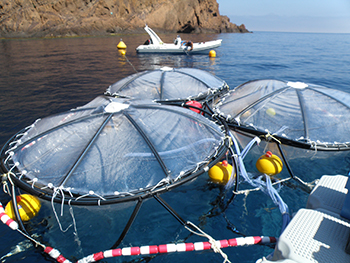
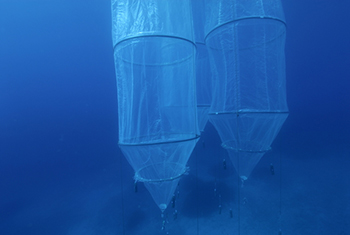
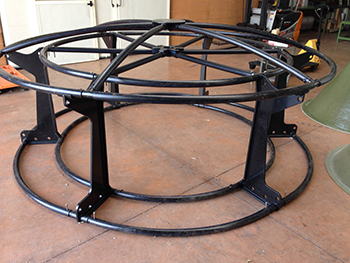
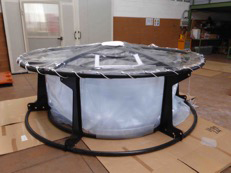
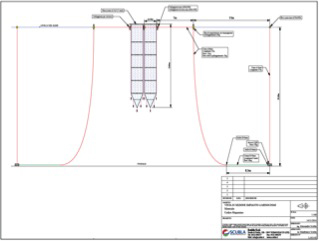
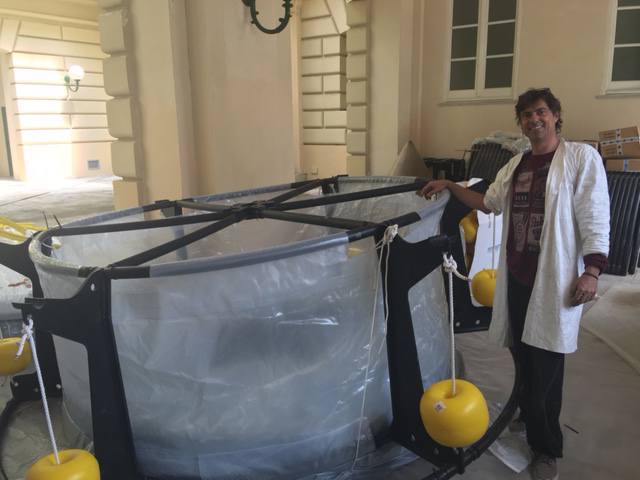 Tra il parco di strumentazioni oceanografiche, la SZN dispone di un set di mesocosmi pelagici realizzati ad-hoc per esperimenti in situ controllati in acque costiere. Questi mesocosmi, di numero 6, hanno una capacita di circa 100 m3, con una profondità di 15 metri. Sono muniti di un sistema di campionamento a tre profondità, 0.2, 5 e 10 metri, e di sensori di temperatura e luce alle stesse profondità.
Questi sistemi permettono di realizzare esperimenti a mare per un periodo breve (< 1 mese) in periodo e zone protette da mare mosso o onde forti che potrebbero distruggere l’installazione.
I mesocosmi sono sistemi sperimentali che permettono di svolgere studi in situ sull’ecosistema pelagico, a scala intermedia tra i microcosmi setati in laboratorio e la complessità del mondo reale.
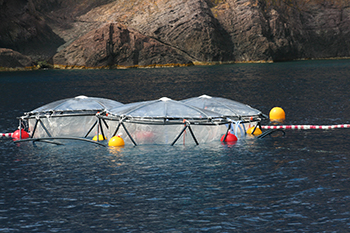 Queste strutture al momento dell’installazione in natura racchiudono la massa d’acqua presente, che quindi conserva tutte le proprietà dell’ecosistema. Non ci sono scambi con l’esterno, evitando avvezione ed influssi orizzontali e verticali.
I vantaggi degli studi con tali sistemi sono:
- Permette di studiare la risposta (nel tempo) dell’ecosistema ad una modifica ambientale indotta.
- Permette un disegno di campionamento complesso e ottimale per la comprensione del funzionamento degli ecosistemi pelagici costieri.
- Permette di investigare l’ecosistema o una parte dei suoi componenti in condizioni ambientali realistiche.
- Permette di investigare quasi tutta la rete trofica contemporaneamente.
- Consente lo studio delle interazioni in rete trofica.
- Consente lo studio delle interazioni tra i componenti e/o gruppi funzionali.
- Consente lo studio del flusso di materia all’interno dell’ecosistema e quindi di parametrizzare.
- Consente di compiere studi con replicati.
Laboratorio di Tassonomia Integrata degli Organismi Marini
Responsabile: Francesco Paolo Patti
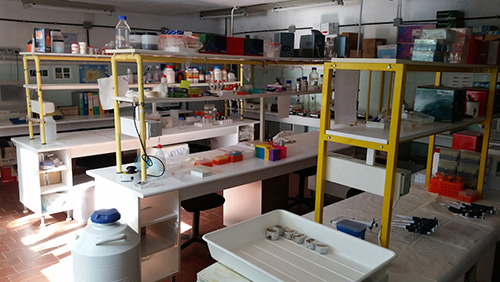
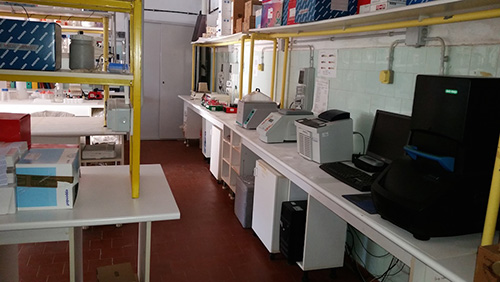
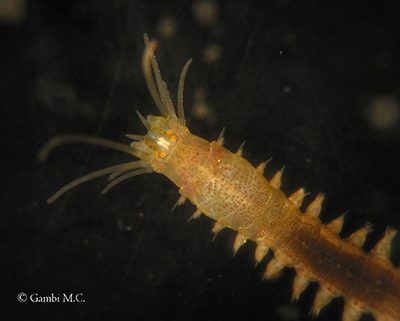
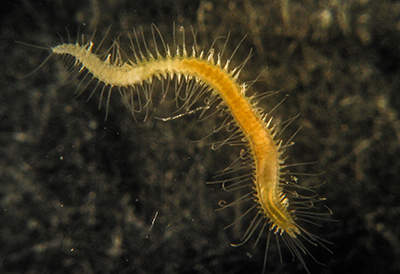
Nel Laboratorio di Tassonomia Integrata degli Organismi Marini si effettuano analisi di tassonomia classica, di filogenesi e filogeografia comparata di organismi marini con un approccio multidisciplinare integrato di tipo morfologico, molecolare, cellulare ed ecologico. Di seguito le principali attività svolte:
Attività
- Sorting di campioni di organismi marini, identificazione e conteggio di specie.
- Identificazione tassonomica di organismi marini con metodi morfologici tradizionali e molecolari avanzati (compresa la preparazione di voucher genetici ed ecologici).
- Estrazione e conservazione di DNA da differenti organismi (tessuto di alghe e invertebrati marini).
- Estrazione di RNA da differenti organismi (tessuto di alghe e invertebrati marini).
- Estrazione dei metaboliti secondari.
- Elettroforesi di minigel di agarosio e documentazione digitale.
- Amplificazione di DNA (ss, ds).
- Clonaggio di frammenti target di DNA (plasmidi preps, restrizione e analisi PCR).
- Real-Time fluorescent Polymerase Chain Reaction.
- DNA barcoding.
- Preparazione dei frammenti di DNA per sequenze (in collaborazione con l'Unità SZN di Biologia Molecolare e Bioinformatica).
Sistemi per la sperimentazione
- Messa a punto di protocolli specifici di laboratorio.
- Sistemi di analisi bioinformatica per: 1) studio della variabilità nucleotidica (creazione di software di analisi di metadati); 2) studio di confronto tra morfotipi attraverso metodi di morfometria geometrica.
Analisi
- Analisi delle sequenze di DNA compresa la ricostruzione di alberi filogenetici.
- Analisi della variabilità morfologica e del polimorfismo genetico.
- Analisi delle frequenze alleliche e della distribuzione genotipica.
- Analisi del polimorfismo dei frammenti di restrizione.
- Preparazione di campioni per analisi morfologiche (utilizzo di fissativi per osservazioni al microscopio ottico e al SEM) e per analisi molecolari (crioconservazione, fissativi standard e RNALater).
Strumentazione
- Stereomicroscopio.
- Vibratomo.
- Rotavapor.
- Cappa chimica.
- Cappa flusso laminare.
- Apparato per elettroforesi su minigel.
- Centrifuga refrigerata da banco.
- Spettrofotometro "Genequant Pro Classic".
- Termociclatori PCRs (Techne- Euroclone).
- RTPCR BIO RAD Opticon 2.
- Incubatore per culture cellulari.
- Bilancia analitica.
- Bagnetto termostatato (5l, +30°C/+120°C).
- Vortex da banco.
- Autoclave/Sterilizzatore.
- Macchina per la produzione di granulato di ghiaccio.
- Dewars per azoto liquido (5l+30l).
- Ultracongelatore verticale-86°C.
- Congelatori verticali -20°C.
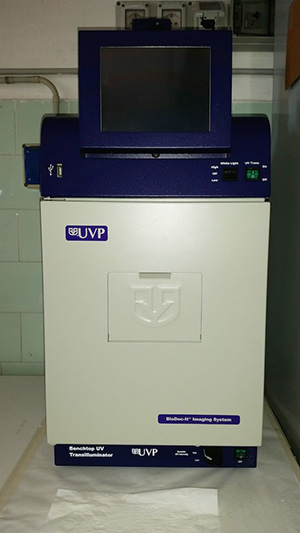
- UVP BioDoc imaging workstations per analisi immagini semplici e/o a fluorescenza di gel.
- Computer dedicato per analisi filogenetiche e data minin.
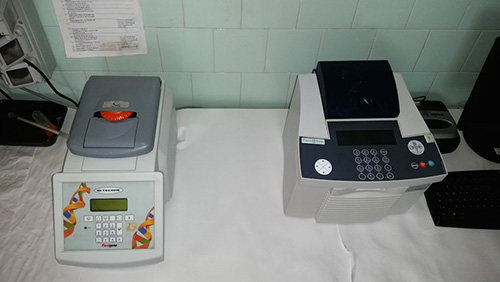
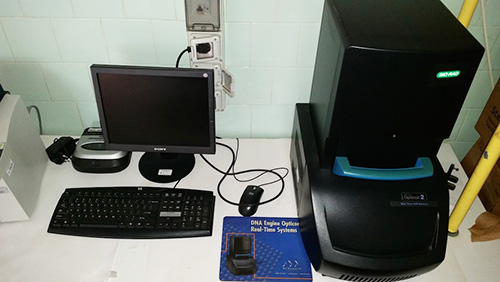
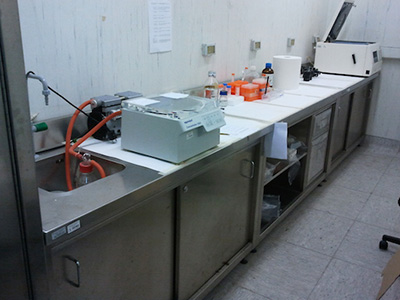
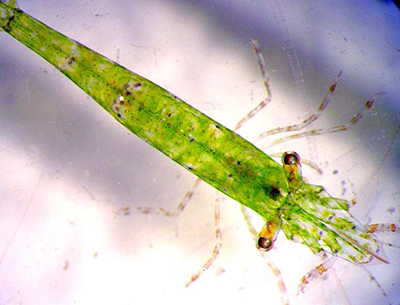
Progetti di ricerca
ABBaCo - Restauro Ambientale e Balneabilità del SIN Bagnoli-Coroglio
DIsCO - Diatom life cycles, molecular controls and contribution to ecosystem dynamics
EMSO MedIT - PON R&C 2007-2013 - PAC Potenziamento infrastrutture di ricerca pubblica - Linea di intervento B. Interventi per l’adeguamento e il consolidamento di infrastrutture per il monitoraggio ambientale
ESSEM COST Action ES0906 - Seagrass productivity: from genes to ecosystem management
GRASSMET - Climate change effects on seagrass secondary metabolism: ecological implications
HighGrass - High-CO2 effects on seagrass photosynthetic ecophysiology
INBALANCE - INvertebrate-BActeriaL Associations as hotspots of benthic Nitrogen Cycling in Estuarine ecosystems
IRMA - Implementazione e connessione Remota di una piattaforma per il monitoraggio in tempo reale di microorganismi MArini Finanziato con Decreto MIUR del 26-3-2014
OCEAN MEDICINES - Marie Skodowska-Curie Research and Innovation Staff Exchange (RISE) finanzia partners accademici e industriali per sviluppare composti da microorganismi marini con attività anticancerogena e anti-infettiva
PALEOPARK - Seagrass palaeo-records as a tool for the evaluation, diagnosis and prognosis of the evolution of species, communities, and processes in Spanish insular National Parks
PharmaDeep - Progetto Europeo EUROFLEET2 che finanzia una campagna oceanografica nei mari subantartici per campionare organismi a grande profondità (5000m) per potenziali applicazioni in campo biomedico
PharmaSea - Progetto Europeo focalizzato sulla ricerca, sviluppo e commercializzazione di nuove biomolecole da organismi marini
PON01_00117 Antigeni e Adiuvanti per Vaccini e Immunoterapia.
Capofila: Novartis Vaccines & Diagnostics srl
PON01_02093 Studio di nuove tecnologie e piattaforme tecnologiche per il miglioramento di processi produttivi di principi attivi farmaceutici di interesse industriale e ricerca di nuove molecole bioattive da sorgenti naturali
Capofila: Sanofi-Aventis S.p.A.
PON01_02782 Nuove strategie nanotecnologiche per la messa a punto di farmaci e presidi diagnostici diretti verso cellule cancerose circolanti (CTC).
Capofila: Biogem S.c.a r.l.
RESIGRASS - An holistic understanding of seagrass functioning and resilience to local-scale disturbances: from molecular to biogeographical scales
S&T MED - finanziato dal Programma Operativo ENPI CBC Mediterranean Sea Basin 2007/2013 dell’Unione Europea
Progetti di ricerca
SECRETED - Sustainable Exploitation of bio-based Compounds Revealed and Engineered from naTural sources
SEDREMED - Bioremediation of contaminated sediments in coastal areas of ex-industrial sites 2021-2024
ISIDORE - Integrated Services For Infectious Diseases Outbreak Research
HOTBIO - A holistic approach to training a new generation of scientists in marine biodiscovery
BlueRemediomics - ARNESSING THE MARINE MICROBIOME FOR NOVEL SUSTAINABLE BIOGENICS AND ECOSYSTEM SERVICES
Project @ CNR “SCANFISH” SEA COSMETICS AND NUTRACEUTICS: FROM FISHERY AND AQUACULTURE BYPRODUCTS
PON project “ALIFUN” Development of functional foods for the innovation of traditional Italian food products
PRoDiA: Droplet digital PCR to assess the occurrence and infer the ROle of prostaglandin in natural DIatom Assemblage in the Ionian coastal waters


Copyright © 2015 by Stazione Zoologica Anton Dohrn Napoli - Italy
Villa Comunale, 80121 Napoli - Tel.+39 081 5833111 - C.F./P.IVA : IT 04894530635 - PEC: ufficio.protocollo(at)cert.szn.it