


 Tenders and Job OpportunitiesJob callsScholarships and research fellowshipsOpen CallsENGLISHPages
Pages
Mission
The Department of Biology and Evolution of Marine Organisms (BEOM) focus on fundamental biological mechanisms in marine organisms allowing animals to deal with the challenge of Life on Earth.
By applying multi-faceted approaches we focus on i. the regulatory mechanisms that direct development of organisms from fertilization to adulthood, and ii. the genomic, cellular, and neural machinery underlying biological, physiological and behavioral plasticity of organisms to tackle adaptation and evolution.
The study of marine organisms allow us to exploit possible sources of natural products and metabolic processes for the use in biotechnology including the food industry and human health.
The know-how and expertise of researchers, technologists and technicians belonging to BEOM cover a broad spectrum of scientific fields, including molecular biology, biology of reproduction and development, signal transduction, gene regulation and genetics, bioinformatics, comparative genomics, cell biology, physiology, ecotoxicology, biochemistry, zoology, physiology, neurosciences and behavioral biology. These skills benefit from the availability and extensive experience working on different species at different evolutionary distances belonging to Protostomes and Deuterostomes.
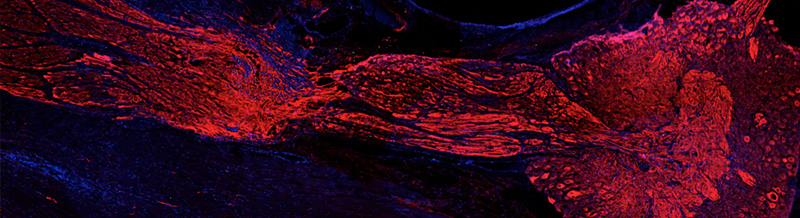
Research activities include field and laboratory based experiments by applying numerous techniques including, for example: manipulation of gene function such as knock-down, knock-out and transgenesis by microinjection and electroporation; high-throughput genomics, transcriptomics (microarray, RNA-Seq, ChIP-Seq, and Real Time quantitative PCR); biological assays, spectrophotometry, spectrofluorimetry; high-resolution imaging using Confocal Laser Sheet Microscopy (CLSM) associated with fluorescent in situ hybridization (FISH) and immunohistochemistry; classical and electron microscopy (SEM, TEM); electrophysiology and behavioral and cognitive neuroscience methods.
Research projects
ABBaCo - Restauro Ambientale e Balneabilità del SIN Bagnoli-Coroglio
DIsCO - Diatom life cycles, molecular controls and contribution to ecosystem dynamics
EMSO MedIT - Project financed in the framework of PON R&C 2007-2013 - PAC Enhancement of public research infrastructures
GRASSMET - Climate change effects on seagrass secondary metabolism: ecological implications
HEATGRASS - Tolerance to HEAT stress induced by climate change in the seaGRASS Posidonia oceanica
HighGrass - High-CO2 effects on seagrass photosynthetic ecophysiology
INBALANCE - INvertebrate-BActeriaL Associations as hotspots of benthic Nitrogen Cycling in Estuarine ecosystems
IRMA - Implementation and Remote Connection for Real Time Moniotoring of Marine Microorganisms - Funded by the Italian Ministry of University and Education (MIUR)
PALEOPARK - Seagrass palaeo-records as a tool for the evaluation, diagnosis and prognosis of the evolution of species, communities, and processes in Spanish insular National Parks
RECCAM - Seagrass Meadows resilience to global warming: an analysis based on responses at ecophysiological, population and ecosystem levels
PON01_02093 Study of new technologies and technological platforms for the improvement of production processes of active pharmaceutical ingredients of industrial interest and search for new bioactive molecules from natural sources
Leader: Sanofi-Aventis S.p.A.
PON01_02782 New nanotechnological strategies for the development of drugs and diagnostic tools directed to circulating cancer cells (CTC).
Leader: Biogem S.c.a r.l
PON01_00117 Antigens and Adjuvants for Vaccines and Immunotherapy.
Leader: Novartis Vaccines & Diagnostics Ltd.
RESIGRASS - An holistic understanding of seagrass functioning and resilience to local-scale disturbances: from molecular to biogeographical scales
S&T MED - Financed by the ENPI CBC Mediterranean Sea Basin 2007/2013 Program of the European Union
Marine Biotechnology Laboratory
Responsible: Adrianna Ianora
Activities
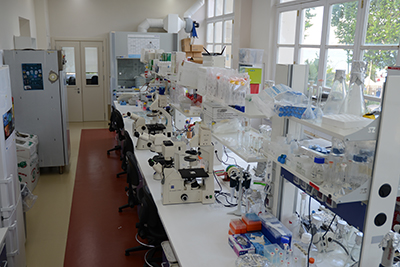
The Biotechnology Laboratory is a multidisciplinary lab that uses and develops different approaches dedicated to the study of marine drug discovery. Research activities include sampling, isolation and maintenance of marine species of biotechnological interest (especially microalgae), preparation of chemical extracts, testing the potential bioactivity at the gene and protein levels of extracts on human cells and model marine organisms.
Experimental Systems
- Molecular and chemical facilities applied to marine biotechnology.
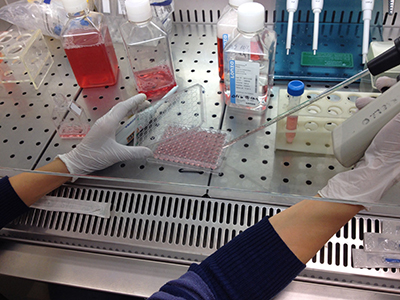
- Human cell culture chambers (biological hood type 1, incubator for human cells, microscopes).
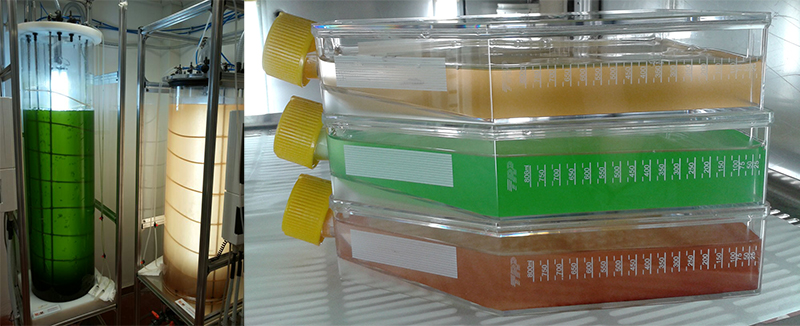
- Rooms for microalgal growth.
- Room with 2 Bioreactors.
Analysis
- Isolation and maintenance of microalgae for potential biotechnological applications.
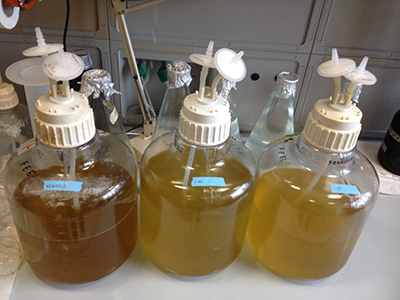
- Cultivation of microalgae at the small (flasks), medium (10L carboys) and large scale (photobioreactors 100 L).
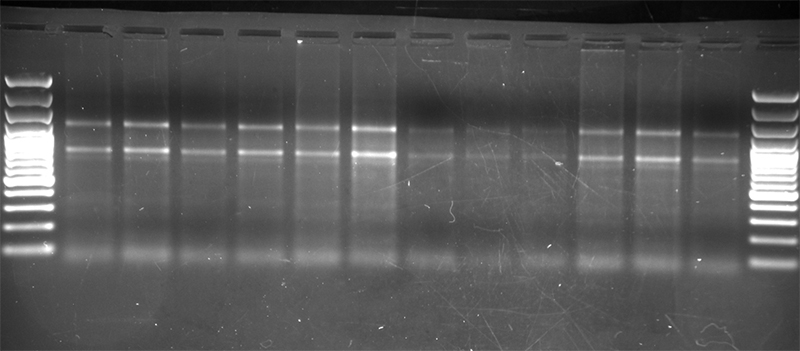
- Genotyping of new species by DNA sequencing.
- Bioassays testing biological activity of extracts, fractions and pure compounds on marine model species and human cell lines.
- Antiproliferative and clonogenic bioassays against aggressive tumor cell lines.
- Antioxidant and anti-inflammatory bioassays on normal cell lines.
- Cellular senescence (anti-aging)bioassays.
- Chronic human diseases (diabetes, Alzheimer's, Crohn's disease) bioassays.
- Molecular studies at the gene and protein levels to identify specific pathways activated by bioactive compounds on human cells (retroviral transfection, PCR array, immunoblot, ELISA).
- Transcriptome analysis of microalgal species.
Equipment
- Basic instrumentation for molecular biology and protein analysis (PCR, centrifuges, electrophoresis apparatus, transilluminator, thermostatic baths, spectrophotometer, pH meter, transblot).
- Biological Type 2 hood for micralgal cultures.
- Chemical hood.
- Microscopes.
- 2 photobioreactors (100 L).
Research projects
PROJECTS 2026
TERRATWIN: 7 Dimensions Digital Twin of the complex interplay between the climate, marine and land biodiversity including social-economic factors
PI: STEFANNI SERGIO (Partner)
European Project
01/01/2026 - 31/12/2028
Other BEOM Partners: Locatello, Modica, Leone
PROJECTS 2024-2025
Ocean-Robocto: Unveiling Octopus CollaborativE hunting with fish through ANimal-ROBOt interaCTiOns
PI: Piero Amodio (Coordinator)
Extra-European Project
01/05/2024 - 30/04/2026
Other BEOM Partners: NO
COSMIC: COntrolled Space MIcroecological system supporting eCopoiesis
PI: Piero Amodio (Partner)
National Project
12/10/2023 - 28/02/2026
Other BEOM Partners: NO
ZooCELL: The evolution of cellular phenotypes in animal diversity: multidisciplinary training in 3D cellular reconstruction, multimodal data analysis and science outreach
PI: ARNONE MARIA IMMACOLATA (Partner)
European Project
01/01/2024 - 31/12/2027
Other BEOM Partners: NO
GRAIL: Golgi Ribbon Architecture in Development and Differentiation
PI: ARNONE MARIA IMMACOLATA (Coordinator)
National Project
28/09/2023 - 27/09/2025
Other BEOM Partners: Ferraro, Benvenuto, Ristoratore
NeuroEvoFun: Dissecting the neurosecretory brain-gut axis function and evolution: from regulome and cell identity to cellular crosstalk
PI: ARNONE MARIA IMMACOLATA (Coordinator)
National Project
01/03/2026
Other BEOM Partners: Annunziata, Benvenuto, S. D'Aniello
SEASIGHT: From the sea for the sight: Identification of novel rna molecules to tackle retinal diseases
PI: SABRINA CARRELLA (Coordinator)
National Project
01/08/2024 - 31/10/2025
Other BEOM Partners: S. D'Aniello, Mirra
MITO SEAS: Mitochondrial Dynamic Modulators from the Seas
PI: SABRINA CARRELLA (Coordinator)
National Project
01/10/2023 - 28/02/2026
Other BEOM Partners: NO
Development of an innovative combinatorial therapy to tackle age-related macular degeneration
PI: SABRINA CARRELLA (Partner)
National Project
01/12/2023 - 28/02/2026
Other BEOM Partners: NO
MITOXYMIRs: OxymiRs modulation as gene-independent therapeutic approach in rare mitochondrial diseases
PI: SABRINA CARRELLA (Coordinator)
European Project
10/10/2023 - 30/09/2025
Other BEOM Partners: NO
OxymiRs modulation as gene-independent therapeutic approach in primary mitochondrial diseases -Access to Services
Euro-BioImaging SEELIFE (European)
2025
OxymiRs modulation effect on in vitro model of Aged-macular degeneration (AMD) - Access to Services
PI: CARRELLA SABRINA
Human Technopole National Facility Access (National)
2025
Unraveling Sex Determination in Bivalves: An Integrative Single-Cell Analysis during the Early Embryo Development of Mytilus galloprovincialis
PI: ENRICO D’ANIELLO (Partner)
National Project
28/09/2023 - 28/02/2026
Other BEOM Partners: NO
Functional and molecular characterization of the circadian clock in the Antarctic key species Euphausia superba
PI: D'ANIELLO SALVATORE (Partner)
National Project
06/11/2024 - 01/09/2026
Other BEOM Partners: NO
MICRO REPRO: Impact of microplastics and associated contaminants on reproduction and development: a comparative and multidisciplinary study on mechanisms of action and protective strategies
PI: ALESSANDRA GALLO (Partner)
National Project
22/03/2022 - 22/03/2025
Other BEOM Partners: Locatello, Locascio
IMPAVID: Exploring the IMpact of gene Presence-Absence VarIation on mussel reproDuctive fitness and larval survival
PI: ALESSANDRA GALLO (Partner)
National Project
05/10/2023 - 28/02/2026
Other BEOM Partners: NO
NuForSpe: New nutraceutical formulations to improve sperm quality in different animal species
PI: ALESSANDRA GALLO (Partner)
National Project
01/12/2023 - 28/02/2026
Other BEOM Partners: NO
SECRETS: Secreted compounds in Echinoderms chemical communication
PI: LEONE SERENA (Coordinator)
National Project
01/12/2023 - 28/02/2026
Other BEOM Partners: NO
NeuroMITilus: Unraveling the role of mitochondria in coping with Hypoxia/Reoxygenation stress in Mytilus galloprovincialis nervous system - Access to Services
PI: SERENA MIRRA (Partner)
Euro-BioImaging SEELIFE (European)
2025
BIODIVERSITY2DRUGS (B2D): Peptide Biodiversity: Advancing Human Health Through Nature's Pharmacological Treasures
PI: MODICA MARIA VITTORIA (Partner)
European Project
01/04/2025 - 31/03/2028
Other BEOM Partners: Leone, Ponte, Locatello
DEEPVEN: Deep venoms: characterization, evolution and biotechnological potential of mesophotic corals venom from Calabria
PI: MODICA MARIA VITTORIA (Coordinator)
National Project
01/01/2021 - 30/09/2024
Other BEOM Partners: Ferraro, Leone, Ponte
SEDNA-Pp: Whales as ecosystem sentinels: climate-induced changes on migration and feeding behavior in a pristine habitat model
PI: MODICA MARIA VITTORIA (Partner)
National Project
05/10/2023 - 28/02/2026
Other BEOM Partners: Stefanni
TRADE: TRophic Adaptation and plasticity Drivers in marine Ecosystems
PI: MODICA MARIA VITTORIA (Coordinator)
National Project
01/12/2023 - 28/02/2026
Other BEOM Partners: Locatello
EUVEN: European Venom Network (COST ACTION)
PI: MODICA MARIA VITTORIA (Coordinator)
European Project
01/11/2023 - 31/10/2024
Other BEOM Partners: Leone
VENOVATE: A Venom-Based Discovery Pipeline for Innovation, Medicine and Sustainable Commercialization (COST Innovators Grant)
PI: MODICA MARIA VITTORIA (Partner)
European Project
01/11/2025 - 31/10/2026
Other BEOM Partners: NO
SEANERGIES SBEP II: Cell-cultured octopus production through sustainable marine biomass valorization
PI: PONTE GIOVANNA (Partner)
European Project
31/08/2025 - 30/08/2028
Other BEOM Partners: NO
FIASCO: Illuminating range shifts through evolutionary FIASCO: contrasting FaIling And Successful ColOnizations in replicated wild populations
PI: RAFFINI FRANCESCA (Coordinator)
National Project
01/12/2023 - 28/02/2026
Other BEOM Partners: NO
GENOA: Genetic Nature Observation and Action (COST ACTION)
PI: RAFFINI FRANCESCA (Partner)
European Project
4/10/2024 - 03/10/2028
Other BEOM Partners: NO
DeuteroNoise: Characterization of maritime noise in different european basins and its impact on ecological relevant deuterostome invertebrates
PI: RISTORATORE FILOMENA (Partner)
European Project
01/12/2022 - 31/05/2026
Other BEOM Partners: NO
PhyloPycno2: Phylogenomics of sea spiders and evolution of arthropods r-opsins
PI: SABROUX ROMAIN (Coordinator)
National Project
22/05/2025 - 21/05/2028
Other BEOM Partners: S. D'Aniello
EuFish European: European fisheries enhancement through "Omic" characterization and innovative seafood production from underutilised fish species
PI: SORDINO PAOLO (Partner)
National Project
14/11/2022 - 13/11/2026
Other BEOM Partners: Romeo
DIGI4ECO: Digital Twin-sustained 4D ecological monitoring of restoration in fishery depleted areas
PI: STEFANNI SERGIO (Partner)
European Project
01/03/2024 - 28/02/2028
Other BEOM Partners: Locatello
EARTH CRUISERS: EARTH’s CRUst Imagery for investigating SEismicity, volcanism and marine natural Resources in the Sicilian offshore
PI: STEFANNI SERGIO (Partner)
National Project
01/06/2018 - 16/05/2022
Other BEOM Partners: NO
D4BLOND: Drone for Biodiversity assessment with imaging, fLow cytOmetry aNd eDNA
PI: STEFANNI SERGIO (Coordinator)
National Project
01/05/2024 - 30/09/2025
Other BEOM Partners: NO
SeNSOR: Smart eDNA/eRNA bioSampler for studying seasOnal biodiveRsity on the Amendolara Seamount
PI: STEFANNI SERGIO (Coordinator)
National Project
01/01/2021 - 14/10/2024
Other BEOM Partners: NO
NEMERTE: NEuroactive MEtabolites and plastics: Re-evaluations Trough a model Elasmobranch
PI: TERZIBASI TOZZINI EVA (Coordinator)
National Project
11/09/2024 - 10/12/2025
Other BEOM Partners: Sirakov, Raffini
SHARKAGE: Evolution of longevity in sharks
PI: TERZIBASI TOZZINI EVA (Partner)
National Project
05/10/2023 - 28/02/2026
Other BEOM Partners: NO
NONOSENS: The NONO killifish Aphanius fasciatus as ecophysiological SENtinel of vulnerable coastal habitatS
PI: TERZIBASI TOZZINI EVA (Coordinator)
National Project
01/12/2023 - 28/02/2026
Other BEOM Partners: Sirakov, Sordino
Marine Biochemistry Laboratory
Reference: Anna Palumbo
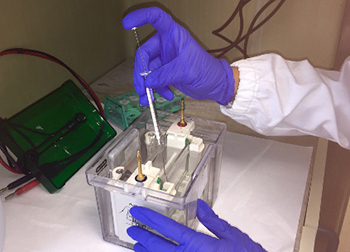 Laboratory equipped for studies of the biochemistry of marine organisms including adaptive responses and immune system.
It includes an area for analysis of proteins and nucleic acids, and classic and basic biological laboratory equipments.
Systems for the experimentation
- UV Spectrophotometer UV, recording spectra of UV/visible and enzyme kinetics.
- electrophoresis on polyacrylamide and agarose gel.
- Centrifuges.
- Chromatography.
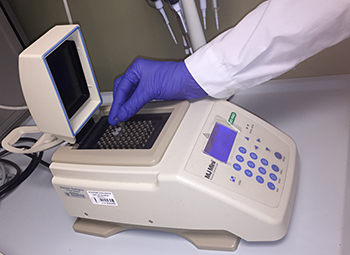 Analysis
- Measure of the response of marine organisms (adult and embryonic and larval stages) to environmental factors.
- Morphological characterization and evaluation of biochemical parameters (doses of enzyme activities, evaluation of the cellular redox state).
- Gene Expression, proteins and post-translational modifications induced by stress.
- Purification and biological characterization of proteins and metabolites from marine organisms.
Behavioral Biology Laboratory
Reference: Graziano Fiorito
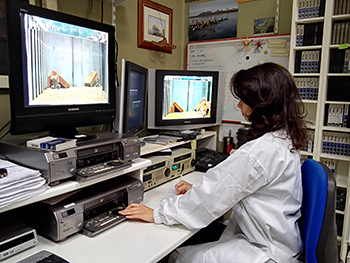 Analysis of the behavior of marine organisms and its adaptive plasticity.
It includes apparata for image and video analysis, video recordings, morphological and morpho-functional analysis of the nervous system and other organs and systems.
Classic and basic biological laboratory equipments are also provided.
Systems for the experimentation
- Technologies for the observation and measurement of behavior.
- Systems for the morpho-functional analysis.
- Anterograde and retrograde transport in nerve fibers. Electrophysiology as applied to nervous system.
- Ultrasound and sonography.
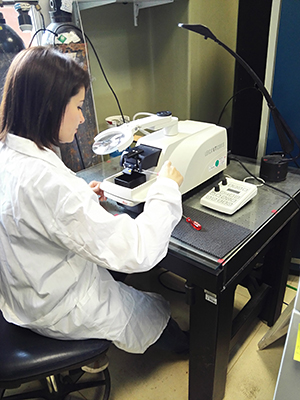 Analysis and approaches
- Morfo-functional characterization of neural systems as applied to marine invertebrates.
- Biological, cellular and physiological analysis of learning and memory recall.
- Neural modulation.
- Assessment of variability of behavioral responses.
- Analysis sensory-motor systems.
Equipment
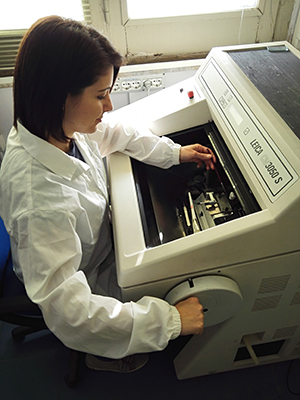
- Ultrasound devices.
- Sliding and rotary microtomes, cryostat.
- Video cameras and video-recording systems (digital and analogue).
Developmental Biology Laboratory
Reference: Maria I. Arnone
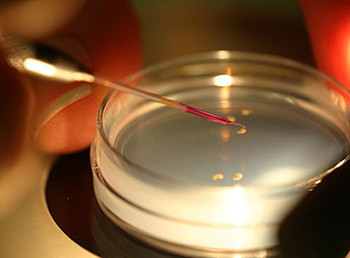 Laboratory dedicated to the study of embryonic development of marine organisms, including functional analysis of gene regulatory networks.
It includes areas for molecular biology and in situ hybridization, microinjection and electroporation of zygotes.
It also includes classic and basic biological laboratory equipments.
Systems for experiments
DevBio Lab uses different model organisms such as ascidians (Ciona, Molgula), sea urchins (Paracentrotus, Strongylocentrotus), sea stars (Patiria), amfioxus (Branchistoma) and fishes (Danio).
The lab carries it activities in collaboration with units Meda e MaRe for collecting, rearing and keeping these organisms.
 Analysis
- Spatial and temporal study of gene expression during embryonic development by in situ hybridization, immunohistochemistry, Real Time qPCR (in collaboration with Mb&Bi unit), western blots.
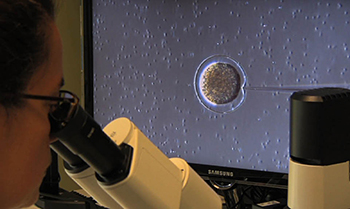
- Disruption of gene expression (knock-out, knock-down, overexpression and transgenesis) by microinjection (antisense oligonucleotides, RNA) or elecroporation (DNA).
- gene expression and morphofunctional analysis fenotipi ottenuti.
 Equipments
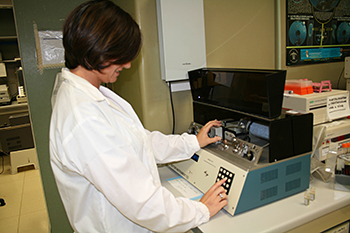
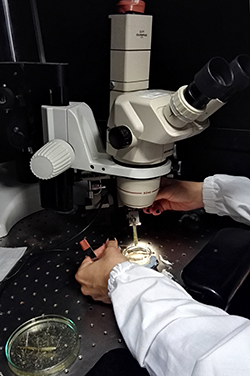
- Systems for microinjection (microscopes, including stereo and inverted microscopes) in sea urchins, sea squirts and fish.
- Electroporation in eukaryotic cells.
- Stereomicroscopes for observation and manipulation of embryos.
- Cells thermostated (at various temperatures) for the culture of embryos and larvae.
- Microscopes equipped with high-resolution cameras for spatial analysis of gene expression.
- Analysis of movement to characterize behavioral phenotypes.
Molecular Physiology Laboratory
Reference: Filomena Ristoratore
 Laboratory equipped for the study of molecular aspects of physiological responses of marine organisms at various stages of life cycle.
Includes areas equipped for electrophysiology and molecular biology, cell culture and basic laboratory equipments.
Systems for experimentation
- Genomic amplification and gene expression.
- Electrophysiology.
 Analysis
- Physiological responses of marine organisms to stimuli.
- Membrane potential during fertilization events of marine organisms.
- Electrophysiology and Neurophysiology.
- Physiological analysis of immune responses in marine invertebrates.
Equipments
- Eletrophysiological Set-ups.
- Cell culture apparata.
- Molecular biology (nucleic acids and proteins).
Computational Genomics Laboratory
Reference: Remo Sanges
Laboratory equipped for studies of computational genomics throughout bioinformatics approaches.
Systems for experimentation
Databases, high throughput functional genomics.
Analysis
Computational approaches, bioinformatics, comparative genomics, data-mining (genomics and transcriptomics in marine organisms).
Strumentazioni
- Personal computers.
- Workstations and servers.
Marine Genomics and Epigenetics Laboratory
Reference: Maria Costantini
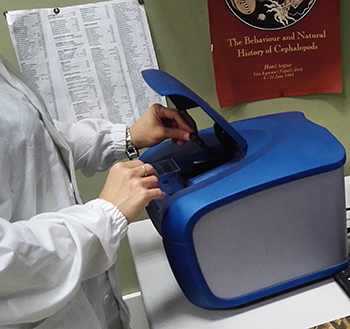 The Laboratory of Marine Genomics and Epigenetics is aimed at developing novel approaches for the study of genomes of marine organisms by applying multidisciplinaty approaches.
It encompasses approaches for the study of epigenetic modifications to study the evolution of diversity and adaptative capabilities of organisms.
The Lab includes areas equipped for molecular biology and genomic and proteomic analysis.
Systems for experimentation
- Facilities for molecular analysis applied to the study of genomes of marine organisms.
- Systems for the morpho-functional characterization and genome analysis.
 Analysis
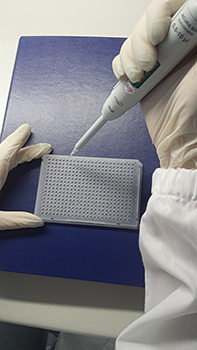
- Genomic approaches to study genome organization in marine organisms.
- Transcriptomics.
- Genomic analysis of the functioning of marine organisms and systems.
- Gene expression (Real Time qPCR, Western Blot).
- Proteomic approaches to study epigenetic modifications (metilation, de-metilation, acetylation, histone and chromatine modifications, etc.).
- Proteomic approaches (antibodies) to identify epigenetic modifications induced by evolution and interaction of organisms with the environment.
 Equipments
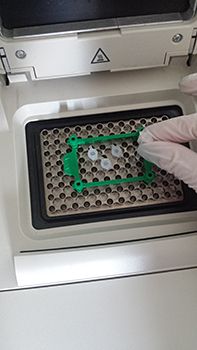
- Electrophoresis, DNA and proteins.
- PCRs including gradient.
- Scanners for micro-arrays and gene expression.


Copyright © 2015 by Stazione Zoologica Anton Dohrn Napoli - Italy
Villa Comunale, 80121 Napoli - Tel.+39 081 5833111 - C.F./P.IVA : IT 04894530635 - PEC: ufficio.protocollo(at)cert.szn.it