



 Tenders and Job OpportunitiesJob callsScholarships and research fellowshipsOpen CallsENGLISHPages
Pages
Mauro Magnani
Board of Auditors
Dott. Filippo Capodiferro, President
Dott. Stefano Incarnati, member
Dott. Stefano De Santis, member
Appointment Board of Auditors (in Italian)
Board of Auditors until December 2020
Dott. Giuseppe Di Nardo – President
Dott. Emanuele Bertulli – Member
Dott. Francesco Tulimeri – Member
Appointment Board of Auditors - 2016 (in Italian)
General Director
Ing. Massimo Ferdinando Francesco Cavaliere
e-mail: direzione(at)szn.it
Segreteria del Direttore
Italia Canettieri
Tel.: +39 081 5833253
E-mail: italia.canettieri(at)szn.it
Vice President and Legal Representative
Silvio Greco
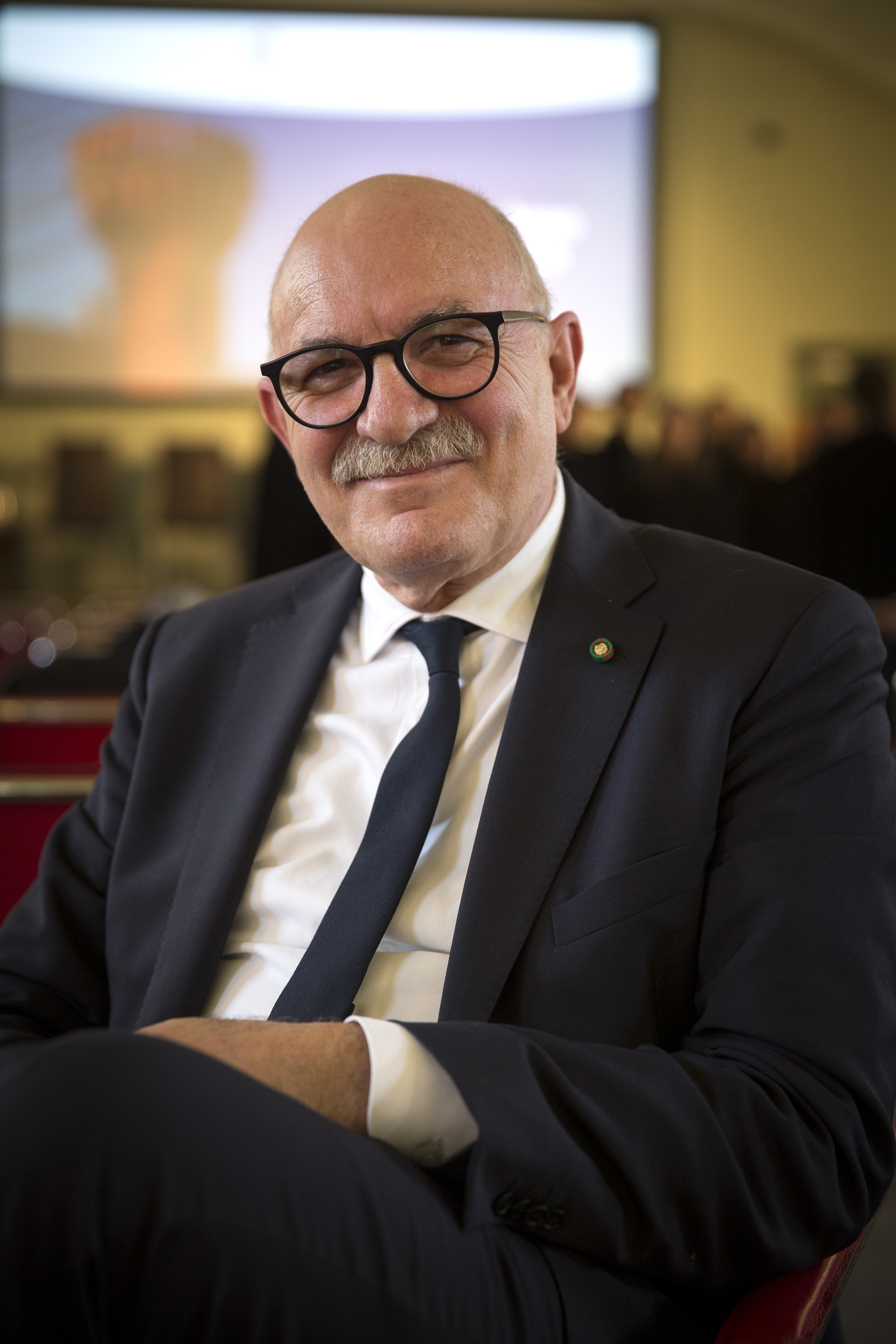 Marine biologist, Research Director
Vice president of the Zoological Station Anton Dohrn, legal representative of the organisation
Professor of animal production, University of Gastronomic Sciences of Pollenzo
Professor of Marine Ecology, Pontifical University Antonianum Rome
Former member of the CNSA (National Scientific Commission for Antarctica)
Member of the National Council of WWF Italy
Grand Officer of the Order of Merit of the Republic
He has carried out research campaigns in almost all the seas of the world, participating in 6 research campaigns in Antarctica.
Author of over 200 national and international scientific publications and author of five books "Guarda che mare" with Cinzia Scaffidi (2007) the "Pesce" illustrated by Sergio Staino (2015) published by Slow Food Editore, "Un Onda di Plastica" with Raffaella Bully, ed. Manifestolibri (2018), “Plastic on the Plate” Giunti Editore (2020). “The words of the Ecological Transition” AA.VV. Ed. Environment (2021)
Segreteria del Presidente
Giovanna Di Gennaro
Tel. +39 081 5833215
E-mail: presidenza(at)szn.it
PRESIDENT
Prof. Roberto Bassi
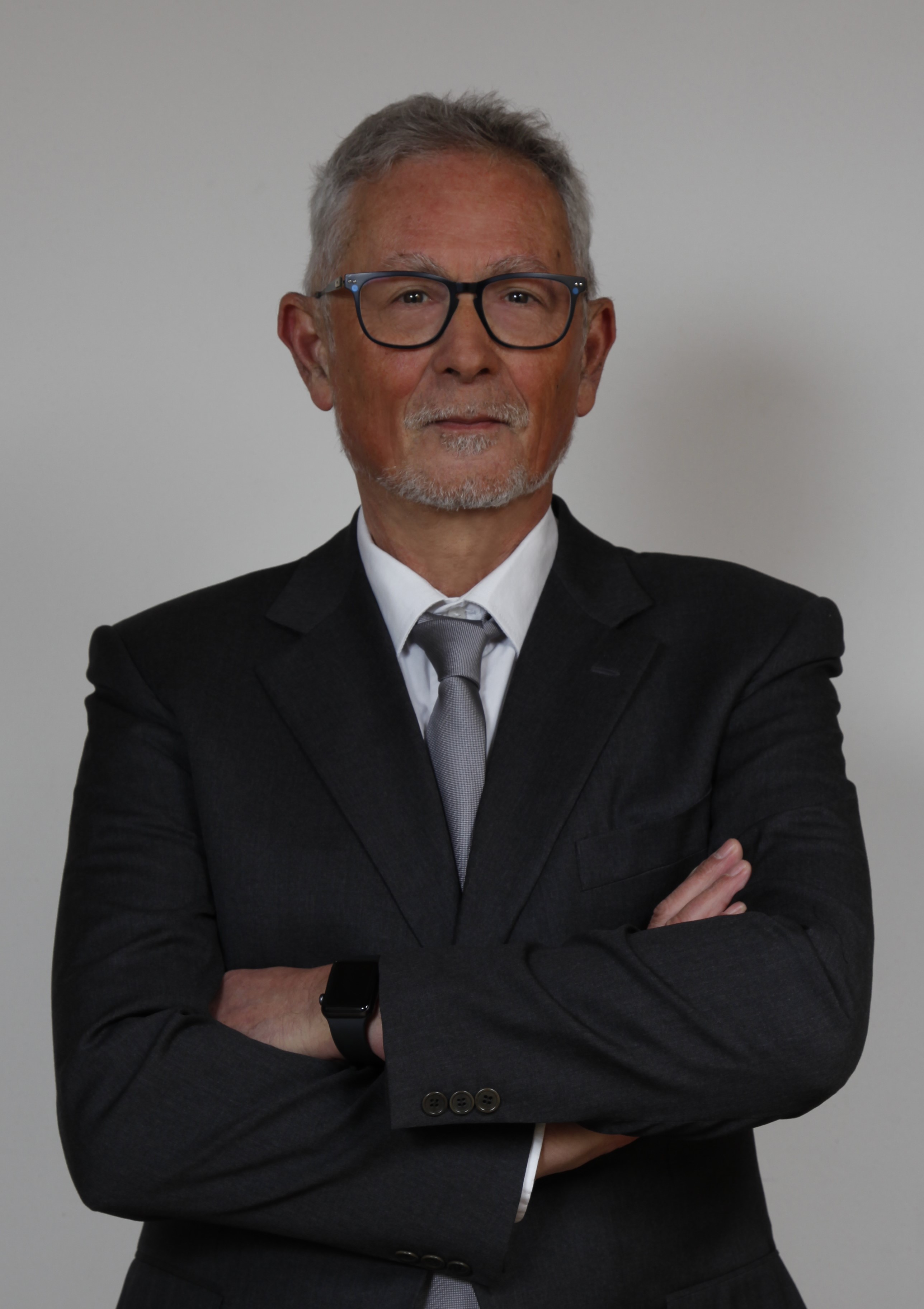 Roberto Bassi (1955) was born in Vicenza (I). He graduated in Biology in Padua (1977), after which, he worked as microbiologist and botanist in the same University till 1983, when he won an assistant professorship in Plant Physiology and Biochemistry. He specialized in genetics in Copenhagen, Biophysics in Paris and Molecular Biology in Geneva. He has been teaching Plant Biochemistry, Physiology and synthetic biology in Padua, Urbino, Marseille, Lausanne and Verona. His research focuses on the structure and function of the photosynthetic systems of plants and algae and the environmental stress physiology with the aim of optimizing the light to biomass conversion efficiency and devise biotechnological solutions for environmental sustainability, with special reference to the management of carbon cycle. He has published more than 300 articles in international journals with an HF of 102 and 28.000 citations. He is a member of the National Academy of Lincei, National Academy of Technology, the EMBO, the European Academy and others. He was awarded theBaccarini-Melandri prize, the Herlitzka prize, for Physiology, the von Humboldt Award, the Chinese Academy of Sciences Award and the Miller Research professorship in Berkeley. He is the P.I of the ERC advanced grant GrInSun (2022-2027). He has been serving as the chair of the scientific advisory board of the Stazione Anton Dorhn in Naples of which he is now the President.
Segreteria del Presidente
Giovanna Di Gennaro
Tel. +39 081 5833215
E-mail: presidenza(at)szn.it
Gallery Home

Give your 5 x 1000 to the Stazione Zoologica Anton Dohrn
Code: 04894530635
The Stazione Zoologica Anton Dohrn of Napoli, founded in 1872, is a public Research institution entirely dedicate to scientific research. Here more than 20 Nobel Laureates have worked and made scientific progresses that contributed to the wellbeing of humanity.
In our Research Institution, marine animals and their habitat are studied and protected. The monitoring of the Mediterranean coasts and seabed is carried out with the most updated technical scientific equipment and the researches cover some of the most advanced sectors of biology.
Giving your 5 x 1000 to the Stazione Zoologica costs nothing, is simple and is upon your choice, it is an opportunity to support the non-profit organizations, such as the Zoological Station.
The 5 x 1000 at the Stazione Zoological will be entirely dedicated to protect the marine life and support the research of young scientists.
If Environment is important for you, please help us to learn more about our seas with your contribution: to protect our environment, we first need to understand it!
How to donate:
To donate your 5 x 1000 to the Stazione Zoologica, just sign and write the fiscal code of the Stazione Zoologica Anton Dohrn, in your tax declaration.
Fiscal Code: 04894530635
Chemical Ecology Laboratory
Supervisor: Dr. Giovanna Romano
Scientific activities
The Laboratory of Chemical Ecology offers instrumentation and support to conduct studies of Chemical Ecology on the marine plankton. The research activities carried out in the laboratory are focused in particular on the study of the effects that secondary metabolites produced by diatoms induce in planktonic organisms and in marine model organisms such as sea urchins. The laboratory is also equipped for the extraction and the first fractionation of bioactive compounds and for the study of their biological activity.
Experimental systems
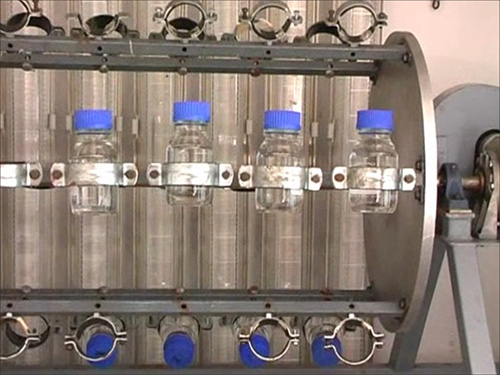
- Rotating wheel for copepod rearing and experimentation.
- Thermostated chamber for microalgae cultivation and incubation of copepods in controlled conditions.
- Basic facility for microalgae cultivation.
Analysis
- Sorting, isolation and identification of live phytoplankton and zooplankton species from natural samples.
- Determination of ingestion and reproduction rates of marine organisms.
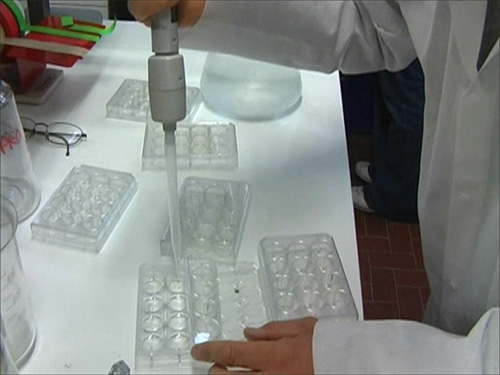
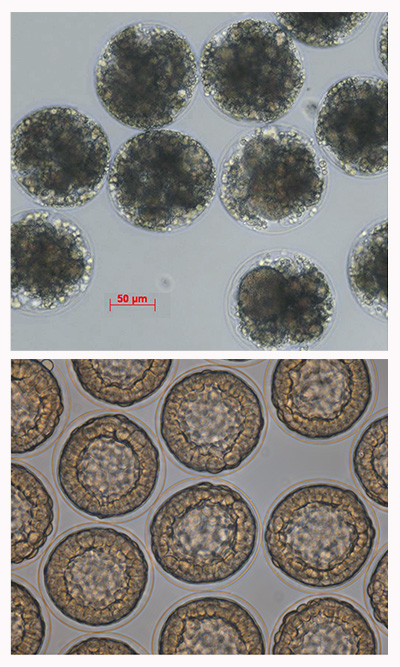
- Biological assays to test diatoms and their metabolites using copepods and sea urchins.
- Analysis of assay results by light microscopy.
- Culturing of microalgae in different media.
- Preparation of algal pellet by centrifugation.
- Extraction and first fractionation of secondary metabolites from algal pellets.
- Biochemical and colorimentric assay to study the metabolism of oxylipins in diatoms.
Equipments
- Chemical hood (total expulsion).
- Stereo-microscopes.
- Upright and inverted microscopes.
- Fluorescence microscope equipped with a PC and video camera.
- Benchtop refrigerated centrifuges.
- Rotavapor.
- Spectrophotometer.
- Sonicator.
- Ph meter.
- Oxygraph.
- Recirculating water bath.
EMBRC
The European Marine Biological Resource Centre
In short: the European Marine Biological Resource Centre (EMBRC) is a Distributed Research Infrastructure providing services to support research on marine biological resources. Its end users are researchers and technological engineers from academia, universities, and from the private sector.
The European Marine Biological Resource Centre (EMBRC) is a distributed Research Infrastructure (RI) composed of marine biological stations and institutes across the European Research Area (ERA). Teams of scientists in EMBRC engage in interdisciplinary research and technological development in marine biology and ecology. The RI is equipped with state-of-the-art research platforms and instruments organized into scientific services. External users from academia and industry can access this stimulating scientific ecosystem to pursue fundamental and applied research on marine bioresources. In particular, EMBRC aims to drive forward the development of blue biotechnologies.
The distributed nature of EMBRC enables it to provide access to the entire marine biodiversity along the European coast, far beyond what each station in isolation can offer. Each of the stations specializes in particular sets of model species, permitting EMBRC as a whole to offer a broad array of models for innovative scientific and technological applications. EMBRC gives its users unprecedented access not only to its interconnected research infrastructure but also to its background knowledge and expertise, thereby greatly facilitating the research endeavors of its external users. The integration of resources and knowledge on such a large scale over the decades to come will enhance the efficiency of training, knowledge transfer, international collaboration and EU global positioning in marine biological sciences. It will foster the development of key enabling technologies, in particular blue biotechnologies. Developments in these fields will, in their turn, stimulate blue growth, economic development and human wellbeing across the ERA. In conclusion, the RI will have an enormous potential in fostering research, education and innovation in marine biology. It will contribute to creation of excellence needed to achieve the goals established in the "Europe 2020 Strategy" and the "2010 ESFRI Roadmap".
EMBRC constitutes one of thirteen Research Infrastructures (RI) on the Biological and Medical Sciences (BMS) group and it forms a bridge towards the Environmental Sciences RIs.
EMBRC obtained three years funding from the European Commission to prepare itself. At the close of this preparatory phase, January 2014, an EMBRC Business Plan and a ready-to-sign Memorandum of Understanding was delivered, inviting countries to express their willingness to set up the EMBRC as a European Research Infrastructure Consortium (ERIC). The signatories, France, Norway, the UK, Belgium, Spain, Portugal, Italy, Greece and Israel, established an EMBRC Implementation Board with the overarching tasks to set up EMBRC and apply for the ERIC status. The Board appointed a General Director, which has commenced her work for EMBRC. France was selected by the partners to host the statutory seat and therefore, the EMBRC core office is located at the UPMC in Paris. Each of the signatory countries has established a national node staffed by a node director and a liaison officer to guarantee optimal collaboration with the core office.
Central Core Office: UPMC, Paris, France
Executive Director: Nicolas Pade
Web: www.EMBRC.eu
Head Quarter secretariat: This email address is being protected from spambots. You need JavaScript enabled to view it. - This email address is being protected from spambots. You need JavaScript enabled to view it.


Copyright © 2015 by Stazione Zoologica Anton Dohrn Napoli - Italy
Villa Comunale, 80121 Napoli - Tel.+39 081 5833111 - C.F./P.IVA : IT 04894530635 - PEC: ufficio.protocollo(at)cert.szn.it