

 Tenders and Job OpportunitiesJob callsScholarships and research fellowshipsOpen CallsENGLISHPages
Pages
First Edition ISS in Bioremediation of Aquatic Environments

Join the First Edition of the International Summer School in Bioremediation of Aquatic Environments (SSBIOREM1) which will be held at Stazione Zoologica Anton Dohrn of Naples!
Are you a graduate student, PhD candidate or early-career researcher passionate about aquatic ecosystems and sustainable solutions to decontaminate polluted ecosystems?
The International Summer School in Bioremediation of Aquatic Environments, is an intensive four-day experience blending cutting-edge science, practical training, and rich cultural immersion in one of Italy’s most iconic scientific institutions.
Taking place from 7–10 October 2025 at the Department of Ecosustanaible Marine Biotechnology (BLUBIO) sited at the Molosiglio seat (Via Acton, 55) in Naples, this school offers an unparalleled opportunity to learn directly from leading experts in environmental science, microbiology, and biotechnology. The four days of summer school will be focused on current interdisciplinary approaches used in the bioremediation field, focusing on the exploitation of microbes to remove or neutralize pollutants from contaminated sites. It can be considered a promising alternative to conventional chemical methods, which usually foresee high investment costs and do not exclude the formation of toxic byproducts.
The Summer School program organized by researchers and technologists of the Ecosustainable Marine Biotechnology Department of the SZN will enhance current knowledge in bioremediation techniques, contribute to habitat restoration efforts, and highlight the need for innovative, environmentally friendly solutions. Lectures, short communications, and practical afternoon sessions will create a stimulating environment for participants and give them skills and tools on the most updated methodologies in the remediation field.
What You’ll Learn
Bioremediation – the use of living organisms to clean up pollutants from the environment – is one of the most promising solutions to aquatic contamination. This summer school provides a comprehensive overview of the theory, techniques, and current innovations in this rapidly growing field.
Each day focuses on a key theme:
• Day 1: Impact of Pollutants and Introduction to Bioremediation – Begin with a welcome from the BLUBIO Department, followed by engaging lectures on the impacts of pollutants on human health, and the foundational roles of bacteria and microalgae in bioremediation. A hands-on lab will guide you through isolating microalgae and fungi suitable for cleaning aquatic environments.
• Day 2: Bioremediation Strategies using Microorganisms – Dive deeper into the microbial players involved in pollutant degradation, including bacteria, fungi, and algae. Learn how communities of these organisms interact in real-world remediation scenarios. In the afternoon, you’ll construct your own bioremediation microcosm, simulating contamination treatment on a small scale.
• Day 3: Innovative Approaches – Explore novel technologies like MICP (microbially induced calcite precipitation), plastic degradation using microbial enzymes, and bioleaching. Evaluate microcosm performance in the lab while discovering next-generation strategies for environmental restoration.
• Day 4: Case Studies & Success Stories – Wrap up with lectures on real-world bioremediation projects, such as the LIFE SEDREMED initiative, and discuss how lifecycle analysis and biological treatments are reshaping environmental policy and practice. The school concludes with awards for the best student presentations and posters.
Practical Learning
Beyond theoretical knowledge, this summer school is designed to equip you with hands-on experience. Daily lab sessions give you the chance to apply what you've learned, guided by leading researchers in bioremediation. You’ll practice key techniques, from microbial isolation to experimental setup and evaluation of bioremediation performance.
Meet Experts and Build Your Network
You’ll learn from renowned scientist expert in the field. Here the list of speakers that will give a lecture whose expertise covers medical ecology, molecular microbiology, and environmental chemistry and biotechnology:
The summer school also includes student presentation sessions, offering a unique platform to share your own research and receive feedback from experienced mentors and peers.
Cultural & Social Program in Beautiful Naples
When you’re not in the lab or lecture hall, enjoy the vibrant life and history of Naples! Optional evening activities include a visit to the Bagnoli-Coroglio SIN (Sites of National Interest) in the Gulf of Pozzuoli, the stunning Castel dell’Ovo, and social dinner and aperitifs – all designed to foster networking and relaxation.
Why Attend?
• Learn the science behind one of the most critical environmental challenges of our time
• Gain hands-on training in laboratory techniques
• Network with top researchers and fellow participants from across disciplines
• Discover Naples, one of Italy’s cultural treasures
Register now and secure your spot at the International Summer School in Bioremediation of Aquatic Environments! Write an email to This email address is being protected from spambots. You need JavaScript enabled to view it.
Download the registration form at “link”
Registration fee (coffee and lunch breaks)
In-person: 330 €
Remote: 100 €
Number of participants: min. 20 (in-person), max. 2-3 (remote)
Deadline: 8th september, 2025

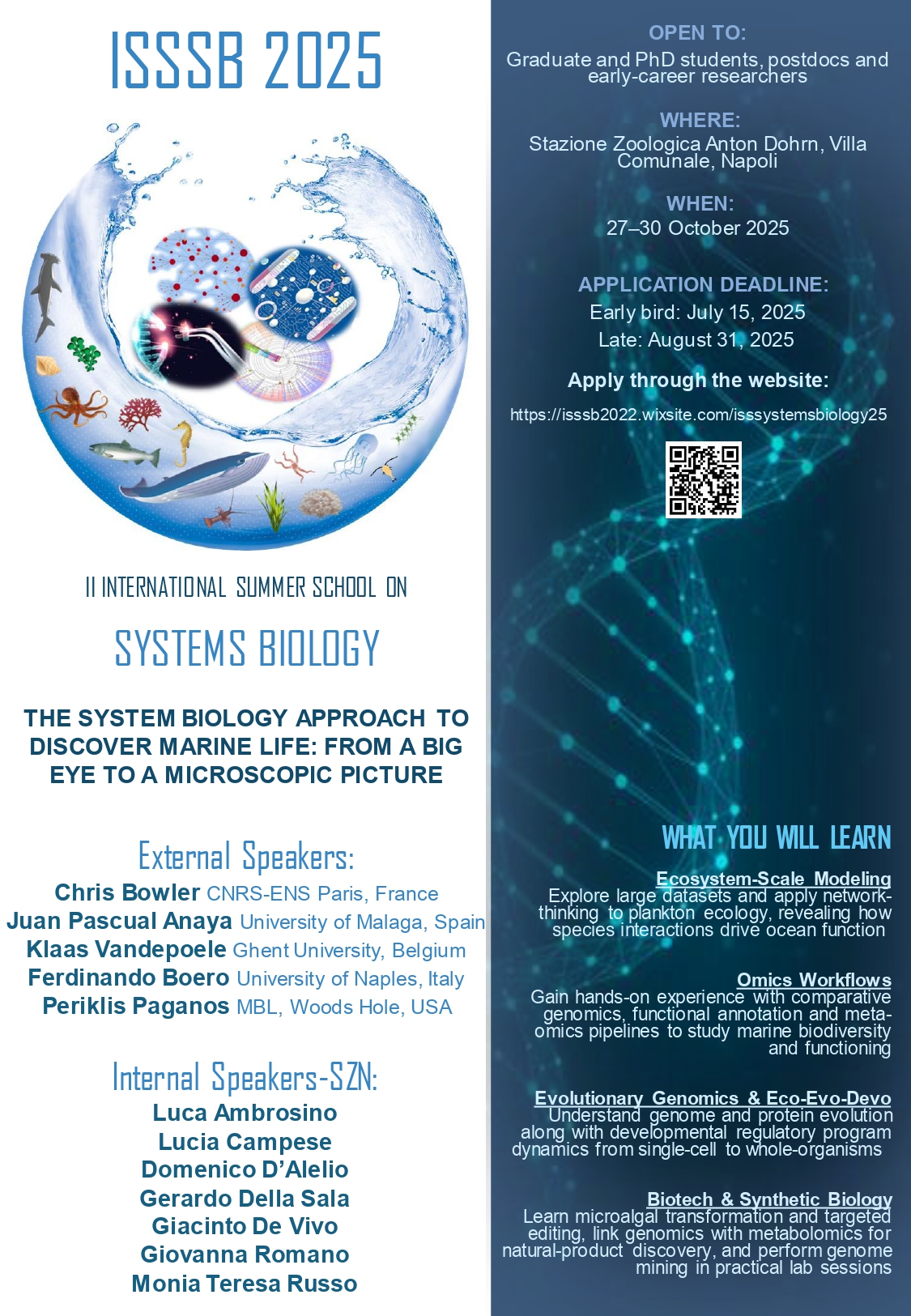
II Edition of the ISS on Systems Biology applied to the marine environment
The Systems Biology Approach To Discover Marine Life: From A Big Eye To A Microscopic Picture
27th - 30th October 2025
Stazione Zoologica Anton Dohrn Naples - Darwin-Dohrn Museum
Villa Comunale, Naples
Systems biology aims to achieve a holistic view of biological phenomena by integrating information of different natures and studying the network of dynamic connections existing between organisms, organisms and their environment, and the molecules that underpin these dynamics (genes, proteins, secondary metabolites). To understand how each element interacts with others and influences the system, an integrated interdisciplinary approach is necessary, encompassing various scientific disciplines and expertise. Biological systems possess the extraordinary ability to adapt in response to environmental stimuli, stress, lack of food, or developmental stage, as well as the fascinating ability to correct their errors, such as gene mutations. From this perspective, given their high biodiversity, oceans represent a perfect example of a complex system whose functioning can only be understood through an interdisciplinary approach.
Systems biology thus integrates knowledge obtained through traditional approaches with that generated by the use of innovative technologies that allow for the collection of large amounts of data. These latter include, for example, genomic and transcriptomic sequencing, proteomics, and metabolomics used on an oceanographic scale (metagenomics) but also at a single-cell level (single-cell genomics). The combination of new technologies, bioinformatics software for data management, and integrated biomolecular and biochemical methods allows for the study of extremely complex biological systems with unprecedented resolution.
Based on the above description, this course aims to provide students with the foundations to develop an understanding of the study of oceans and their biodiversity through a systematic approach.
Target Audience
Open to Graduate and PhD students, postdocs and early career researchers.
Theoretical and practical lesson on:
• Ecosystem Scale Modeling
• Omics Workflows
• Evolutionary;Genomics & Eco Evo Devo
• Biotech & Synthetic Biology
Lecturers
• Chris Bowler CNRS ENS Paris, France
• Juan Pascual Anaya University of Malaga, Spain
• Klaas Vandepoele Ghent University , Belgium
• Ferdinando Boero University of Naples , Italy
• Periklis Paganos MBL, Woods Hole , USA
• Luca Ambrosino, SZN Naples, Italy
• Lucia Campese, SZN Naples, Italy
• Domenico D’Alelio, SZN Naples, Italy
• Gerardo Della Sala, SZN Naples, Italy
• Giacinto De Vivo, SZN Naples, Italy
• Giovanna Romano, SZN Naples, Italy
• Monia Teresa Russo, SZN Naples, Italy
The course is open to a maximum of 30 participants and will be held with a minimum of 20 participants.
Important Information
Application deadline:
Early Bird: July 15, 2025
Late: August 31, 2025
Apply through the website:
https://isssb2022.wixsite.com/isssystemsbiology25
Fee per person:
Early, 350 euros;
Late, 400 euros.
Organizers:
Valeria Di Dato, Rossella Annunziata, Angela Sardo, Lucia Campese, Ida Orefice
info: This email address is being protected from spambots. You need JavaScript enabled to view it.
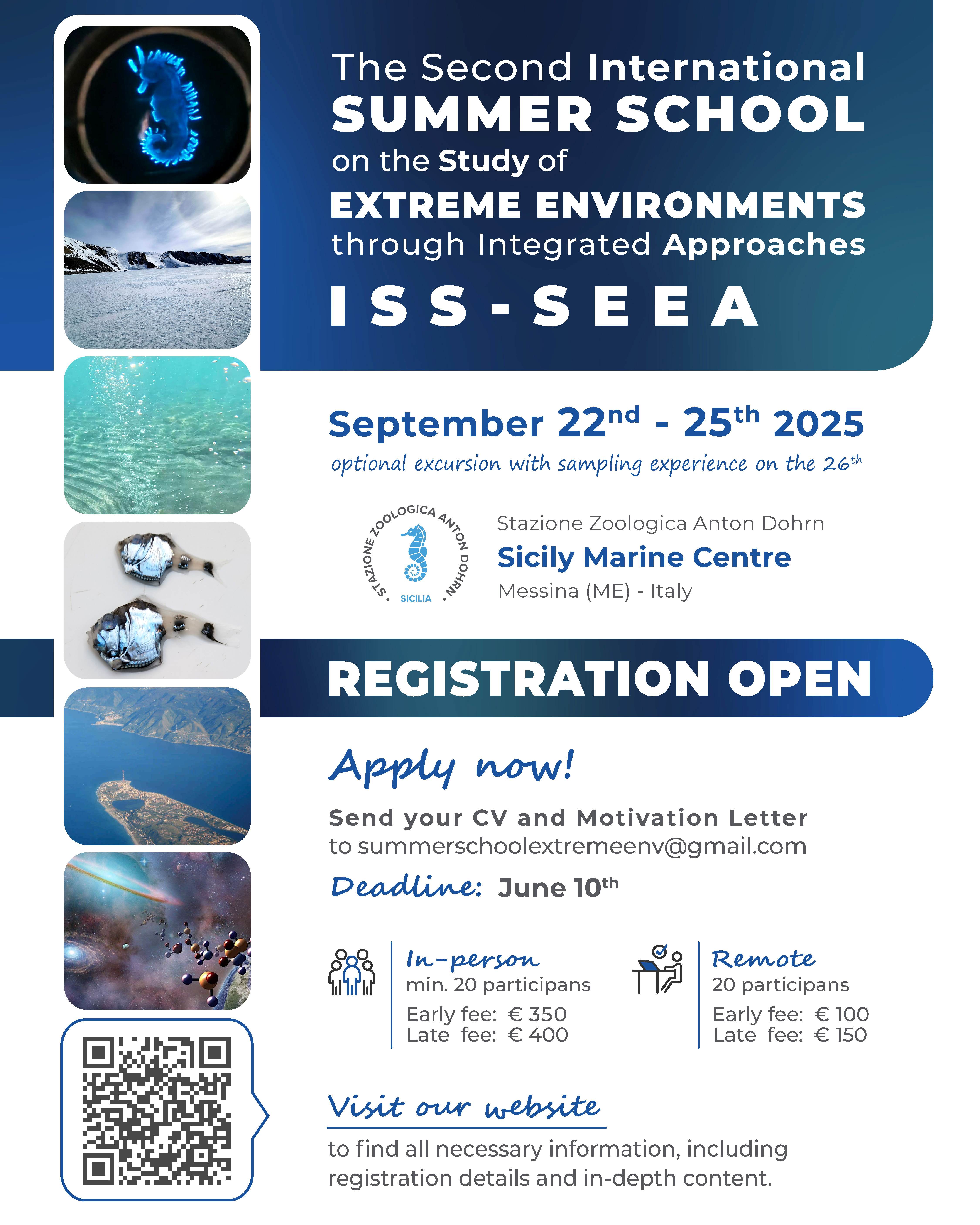
The Second International Summer School on the Study of EXTREME ENVIRONMENTS through Integrated Approaches (ISS-SEEA)
After the success of the first edition, which was widely attended and enthusiastically received by all the trainees, it is with pleasure that we would like to propose The Second Edition of the ISS-SEEA Summer School.
It will take place in 2025, from September 22nd to 25th (optional excursion and sampling experience on the 26th), at the Sicily Marine Centre, Stazione Zoologica Anton Dohrn, Messina. The school will maintain its multidisciplinary approach, combining the ecological and biotechnological approach for the exploration of extreme environments, and will extend its training topics by deepening other specific extreme ecosystems and new research fields. In this vein, the school will be implemented with lessons covering the concepts of bioacoustics in extreme environments, oceanographic dynamics, astrobiology, and anoxic basins. Moreover, a special focus will be devoted to the Strait of Messina and its extreme dynamics. All the training activities will be treated day by day through a combined perspective, merging ecology and biotechnology.
The summer school is a renewed opportunity to enhance cross-disciplinary collaboration and to improve skills and expertise in the knowledge of extreme ecosystems in taxonomy, high molecular approaches, bioprospecting, oceanography, and bioacoustics.
Professors and researchers will give lectures about their research and will share their experiences with the students during group discussion sessions. Practical sessions are envisaged, i.e., observation of mesopelagic species, taxonomy, laboratory experience for the treatment of samples for biotechnological purposes (production of bioactive compounds), and observation of the bioluminescence phenomenon. The second edition of the school will have, as its strong point, the involvement of young researchers from SZN-SMC, who will actively participate in the course's scientific offering, fostering exchange, interaction, and the consolidation of new networks.
· The school is open to students, PhD students, and early career researchers working in the fields of marine ecology and biotechnology.
· All students will be allowed to present their research through either a short talk or a poster.
You can find detailed program and registration information for ISS-SEEA 2025 at: https://summerschoolextrem.wixsite.com/iss-seea
Registration fee
Early bird: € 350 (in-person), € 100 (remote)
Late: € 400 (in-person), € 150 (remote)
Deadlines
· June 10: Send CV and motivation letter to: This email address is being protected from spambots. You need JavaScript enabled to view it.
· Before payment: After receiving the acceptance notification, please complete the registration form following the instructions provided. Your registration will be confirmed by email once we receive and verify your completed form.
· June 30: Complete the Payment (early registration)
· July 31: Complete the Payment (late registration)
Contratti di Ricerca
Bandi attivi
Bandi scaduti
SECOND EDITION OF CRIMAC INTERNATIONAL SCHOOL
A multidisciplinary approach to the study of Symbiosis in Marine ecosystems: from taxonomy to potential biotechnological applications
SymbioMar will be the second edition of the annual ‘CRIMAC International School’ and will be held from November 4th to 7th, 2025, at the Stazione Zoologica Anton Dohrn-Calabria Marine Centre (CRIMAC), located in Amendolara (CS). In alignment with the mission of the CRIMAC project— to serve as a hub for fostering exchanges between Italian and international marine research centers—this immersive event will focus on marine symbiosis: the complex interactions that shape the physiology, ecology, and evolution of marine organisms.
The international school adopts a multidisciplinary approach, covering diverse aspects of marine symbiosis, including taxonomy and evolution, biology, adaptation, climate change, ecological interactions and biotechnology. By examining these topics, the program provides a comprehensive understanding of the key factors influencing marine symbiotic relationships.
Designed to foster both theoretical knowledge and practical skills, the SymbioMar International School will offer lectures from leading experts in the field, alongside hands-on training sessions. Students will be engaged in practical activities such as applying advanced microscopy techniques, laboratory methods for extraction and sequencing, and working with bioinformatics tools to analyze various aspects of symbiosis.
The primary goal of this school is to equip the next generation of researchers with a holistic understanding of symbiosis. Participants will gain valuable skills through a multidisciplinary approach, enhancing their ability to tackle current research challenges. Moreover, it provides a unique platform for networking, allowing new connections with some of the world’s foremost experts in marine symbiosis.
The program is open to graduate students, PhD candidates, and early-career researchers with an interest not only in marine symbiosis but also in the modern techniques used to study it that can be applied in many other research fields.
Course Objective
The SymbioMar International School offers an interdisciplinary and comprehensive program focused on the study of symbiosis in marine ecosystems. By bringing together leading experts in marine biology, ecology, molecular biology, and bioinformatics, the course provides participants with in-depth knowledge of symbiotic relationships, their role in marine biodiversity, and their potential for biotechnological applications. The program emphasizes hands-on training, offering students a unique opportunity to learn advanced techniques and explore the ecological and evolutionary significance of marine symbiosis.
Theoretical Lessons
The theoretical lessons are designed to provide participants with a strong foundation in the study of marine symbiosis, covering topics such as taxonomy, evolution, host-symbiont interactions, and ecological dynamics. Key lectures include:
• Understanding the evolution of symbiotic relationships across marine ecosystems.
• Exploring how symbiosis drives biodiversity and evolutionary processes in marine life.
• Investigating the role of symbiosis in ecosystem processes and their ecological significance in marine environments.
• Examining the impact of climate change on marine partnerships.
• Exploring the potential biotechnological applications.
These lessons offer participants a deep dive into the latest research, enriching their understanding of symbiosis from multiple scientific perspectives.
Practical Lessons
The practical lessons focus on applying theoretical knowledge to real-world scenarios, with hands-on experience in the laboratory. Students will:
• Learn sediment sorting, microscopy analysis, and extraction of biological samples to study symbiotic relationships in marine organisms.
• Learn about different bioinformatics pipelines used to study microbiomes and taxonomy and evolution.
• Learn statistics for meta(prote)omics encompassing a brief intro to R, concepts, and coding.
Lecturers
Dr. Daniela Pica, Stazione Zoologica Anton Dohrn- CRIMAC, Calabria Marine Centre
Dr. Christian Galasso, Stazione Zoologica Anton Dohrn- CRIMAC, Calabria Marine Centre
Dr. Chiara Giommi, Stazione Zoologica Anton Dohrn- CRIMAC, Calabria Marine Centre
Dr. Ulisse Cardini, Stazione Zoologica Anton Dohrn, Genoa Marine Centre
Dr. Carmen Rizzo, Stazione Zoologica Anton Dohrn, Sicily Marine Centre
Dr. Maria Vittoria Modica, Stazione Zoologica Anton Dohrn, Rome – Institutional Interdepartmental Centre
Dr. Laura Núñez Pons, Stazione Zoologica Anton Dohrn
Prof. Harald Gruber-Vodicka, University Kiel (Germany)
Prof. Marco Oliverio, Università la Sapienza, Roma (Italy)
Prof. James D. Reimer University of the Ryukyus (Japan)
Prof. Paul C. Sikkel, University of Miami (USA)
Dr. Didier Aurelle, Université de Toulon (France)
Dr. Grazia Marina Quero, CNR IRBIM (Italy)
Dr. Claudia Pogoreutz, Université de Perpignan (France)
Dr. Davide Maggioni, University of Milano-Bicocca (Italy)
Prof. Davide Seveso, University of Milano-Bicocca (Italy) and MaRHE Center, Magoodhoo, Faafu (Maldives)
Dr. Silvia Bulgheresi, University of Vienna (Austria)
Dr. Tjorven Hinzke, University of Greifswald (Germany)
Dr. Claudia F. Vaga, Smithsonian Institute (USA)
Registration fee (coffee breaks, lunches, and Social Happy Hour included)
Early bird: 350€
Deadline: June 15, 2025
Regular: 400€
Deadline: July 6, 2025
Max Number of Participants: 20
Working Language: English
For more information about speakers and how to participate, visit:
https://crimacszn.com/symbiomar/
Organizing Committee
Daniela Pica, Chiara Giommi, Christian Galasso, Roberto Firmamento, Rosario Balestrieri, Salvatore Urso, Enrica Terranova, Francesca De Domenico.
PROSHARKS
Living on the extinction edge: bridging knowledge gaps to PROtect threatened coastal SHARKS in the central Mediterranean Sea
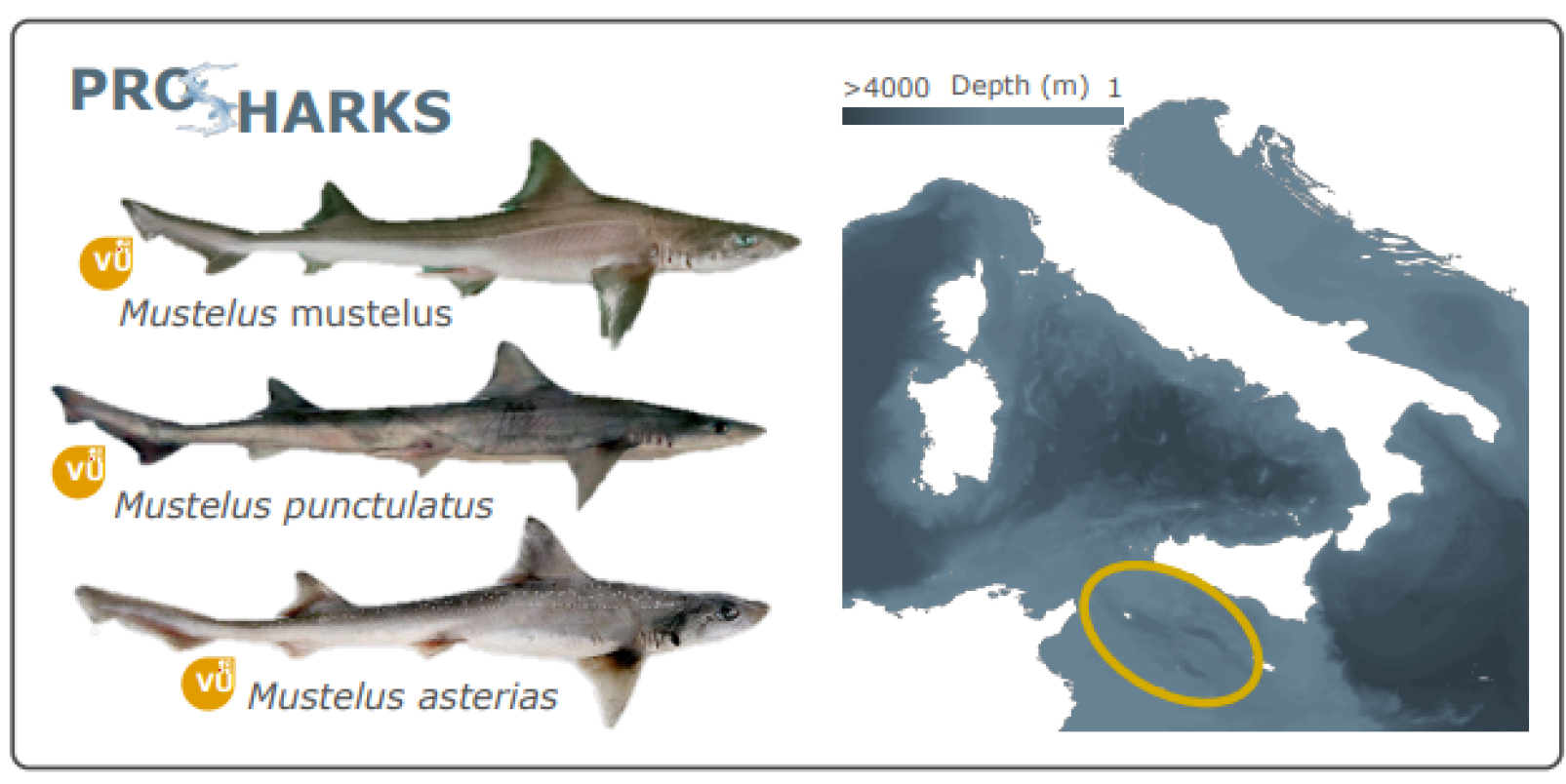
The PROSHARKS project, funded by the Ministry of University and Research (MUR) under the PRIN 2022 program, is dedicated to the conservation of demersal sharks in the Mediterranean. Specifically, PROSHARKS focuses on the three species of smooth-hound sharks (Mustelus mustelus, M. punctulatus, and M. asterias), which are currently considered at risk of extinction in the Mediterranean.
The project will investigate the population structure, connectivity, and spatial and temporal trends of these three species in the Strait of Sicily. This marine area has been globally recognized as an Important Shark and Ray Area (ISRA) by the IUCN (International Union for Conservation of Nature) due to its critical role in biodiversity and the abundance of chondrichthyan species.
PROSHARKS will adopt a multidisciplinary approach, integrating fisheries data, satellite tagging data, genetic and isotopic analyses, and local ecological knowledge (LEK) from fishermen to identify temporal trends, habitat preferences, and spatial connectivity of these species within the Strait of Sicily.
The data collected throughout the project will be used to achieve specific objectives, including:
a) Identifying key areas essential for the species' life cycles and conservation through the development of Species Distribution Models (SDMs);
b) Defining the genetic structure of populations and the connectivity between different groups within the study area (e.g., between the Italian and Tunisian coasts);
c) Assessing the impact of climate change on the future distribution of these species;
d) Defining conservation measures and raising awareness among fishermen and the general public about the ecological importance of sharks in maintaining the balance and functionality of the marine ecosystem.
The project is coordinated by the Stazione Zoologica Anton Dohrn in collaboration with the Polytechnic University of Marche and the CNR IRBIM.
What We Do
SZN coordinates the project and will be primarily involved in the tagging campaign of the species and the analysis of acquired satellite data. Additionally, it will study population trends through interviews with fishermen and identify fisheries management measures aimed at restoring the populations of gulper sharks in the Strait of Sicily.
Partners
SZN, CNR-IRBIM (Mazara del Vallo), Polytechnic University of Marche
Research Area
Marine Ecology
SZN Role
Coordinator
Principal Investigator
Francesco Colloca
Project Manager
Francesco Colloca
Project Duration
24 months: February 2025 – February 2027
Funding Institutions
MUR, PRIN 2022 Call, LS8 sector “Environmental Biology, Ecology, and Evolution”
Involved Personnel
Francesco Colloca, Principal investigator
Manfredi Di Lorenzo, Experienced Researcher
Stefano Moro, Post-doc
Prizes and awards
Stazione Zoologica Anton Dohrn is pleased to honor the memory of Aldo Fasolo and Paolo Brancaccio through two prestigious awards dedicated to young researchers. These recognitions represent a tribute and an incentive for the new generations of scientists.
The awards aim to enhance excellence in research by promoting innovation and critical thinking. They are aimed at young scholars who, with their work, demonstrate dedication and passion for science, embodying the values and legacy of Fasolo and Brancaccio.
Discover the details on how to participate, the selection criteria and the deadlines to submit your application.

Summer School 2025 ECOWAVES
Marine Soundscapes in the Anthropophony Era
Naples, 26th-30th May 2025
Darwin-Dohrn Museum, Villa Comunale, 80121, Naples, Italy
This summer school offers participants a comprehensive introduction to the application of acoustics in ecological studies. Attendees will explore the science of acoustic waves in seawater, gaining foundational knowledge in the physics of sound and the use of cutting-edge instruments to analyze marine soundscapes. The program covers innovative methodologies, from passive acoustic monitoring to advanced technologies such as autonomous underwater vehicles and AI-driven signal detection. Participants will also learn how marine organisms use sound for essential biological functions and examine the effects of human-generated noise pollution on coastal and oceanic systems. Through a blend of theoretical knowledge and hands-on training, the course will provide the tools to assess the role of sound and the impacts of noise on the physiology and behavior of marine organisms. The program will further explore how these effects influence ecological communities, emphasizing the application of mesocosm experiments and field sampling to advance ecological research.
In a nutshell
This summer school is designed to offer a multidisciplinary approach to understanding the critical role of sound in marine ecosystems. It is a unique opportunity to join a growing community of researchers addressing one of the most pressing issues in marine conservation, preparing participants to contribute to innovative solutions and impactful research in this field. The program integrates theoretical and practical sessions, providing participants with comprehensive insights into marine acoustic ecology, technological tools, and effective research and communication strategies.
Target Audience
Open to graduate and PhD students, postdocs, and early-career researchers from the following fields:
(i) Biology and ecology—those who want to learn more about underwater acoustics for their research.
(ii) Physics and engineering—those passionate about marine science and environmental conservation.
Theoretical lessons
- Physics of underwater sound and measurement techniques.
- Underwater acoustics and the role of sound from invertebrates to megafauna.
- State-of-the-art acoustic technologies for monitoring biodiversity and environmental changes.
- The impacts of anthropogenic noise on marine ecosystems and species.
- Communicating acoustic ecology to the public through educational tools and outreach.
Practical lessons
- Setup and calibration of hydrophones and recording systems.
- Identification of sound sources and species-specific vocalizations.
- Use of software for data visualization and soundscape analysis.
- In tank experiments to record effects of noise on invertebrates.
Lecturers
Dr. Francesco Caruso (Stazione Zoologica Anton Dohrn)
Dr. Filomena Ristoratore (Stazione Zoologica Anton Dohrn
Dr. Francesca Rossi (Stazione Zoologica Anton Dohrn)
Dr. Marco Signore (Stazione Zoologica Anton Dohrn)
Prof. Giovanni Zambon (University of Milano-Bicocca)
Dr. Salvatore Viola (National Institute for Nuclear Physics)
Prof. Lucia Di Iorio (University of Perpignan)
Prof. Lucia Manni (University of Padua)
Dr. Marios Chatzigeorgiou (University of Bergen)
Prof. Livio Favaro (University of Turin)
Dr. Virginia Sciacca (Italian National Research Council)
The course is open to 20 participants.
DOWNLOAD THE POSTER HERE: Summer School 2025 ECOWAVES
IMPORTANT INFORMATION
Applications: deadline 4 April.
Participants will be notified by 15 April.
Registration and payment are due by 30 April.
Fee: 250 euro per person (coffee breaks, lunches, icebreaking and social dinner included)
ORGANIZERS: Francesco Caruso, Filomena Ristoratore, Francesca Rossi, Marco Signore
Info: This email address is being protected from spambots. You need JavaScript enabled to view it.
Publications 2024
Virgili R. Fasciglione P., Tiralongo F., Pannone R., Palomba M., Santoro M., De Luca P., Crocetta F. (2024). Interdisciplinary approaches at early invasion stages maximise the evidence on human-induced and climate-driven fish dispersal. Hydrobiologia DOI: https://doi.org/10.1007/s10750-024-05537-y
Campese L., Russo L., Abagnale M, Alberti A, Bachi G, Balestra C, Bellardini D, Buondonno A, Cardini U, Carotenuto Y, Checcucci G, Chiusano ML, D’ambra I, d’Ippolito G, Di Capua I, Donnarumma V, Fontana A, Furia M, Galarza-Verkovitch D, Gallia R, Labadie K, Leone S, Licandro P, Longo A, Maselli M, Merquiol L, Murano C, Oliveira OH, Passarelli A, Percopo, I., Perdereau A, Piredda R, Raffini F, Roncalli V, Ruscheweyh HJ, Russo E, Saggiomo M, Santinelli C, Sarno D., Sunagawa S, Tramontano F, Trano AC, Uttieri M, Wincker P, Zampicinini G, Casotti R, Conversano F, D’Alelio D, Iudicone D, Margiotta F, Montresor M. (2024). The NEREA Augmented Observatory: an integrative approach to marine coastal ecology. Scientific Data 11, 989 https://doi.org/10.1038/s41597-024-03787-y
Bianchi A.R, Di Capua I, Guerretti, V. et al. (2024). The poly(ADP-ribosyl)ation system in the crustacean copepod Temora stylifera (Dana, 1853–1855) from a coastal area of the Mediterranean Sea: a new biomarker of the health status. Euro-Mediterranean Journal for Environmental Integration https://doi.org/10.1007/s41207-024-00625-w
Di Capua I, Luise F., Zampicinini G., CarotenutoY, Roncalli V., R. Piredda (2024) Integrative approach to monitoring metazoan diversity and distribution in two Mediterranean coastal sites through morphology and organismal eDNA. Scientific Report 14, 19291 https://doi.org/10.1038/s41598-024-69520-2
Mule A.*, Neri F.*, Romagnoli T., Accoroni S., Caridi F., Campanella A., Ubaldi M., Sarno D., Totti C. (2024). Seasonal variability of epipelic microphytobenthos community in two subtidal areas of the Northern Adriatic Sea. Mediterranean Marine Science, 25 (3), 650-665. https://doi.org/10.12681/mms.35785
Ruggiero M.V., Buffoli M., Wolf K.K.E., D’Alelio D., Di Tuccio V., Lombardi E., Manfellotto F., Vitale L., Margiotta F., Sarno D., John U., Ferrante M.I., Montresor M. (2024) Multiannual patterns of genetic structure and mating type ratios highlight the complex bloom dynamics of a marine planktonic diatom. Scientific Reports 14, 6028. https://doi.org/10.1038/s41598-024-56292-y
Vannini G*, Di Capua I*, (2024). Collective Paper New records of rarely reported species in the Mediterranean Sea. Mediterranean Marine Science. Vol. 25 No. 1. http://doi.org/10.12681/mms.37214
Uttieri M, Carotenuto Y, Di Capua I, V Roncalli (2024). Special Issue of Ecology of Marine Zooplankton. Journal of Marine Science and Engineering, https://doi.org/10.3390/jmse11101875
Gómez F., Roselli L., Zhang H., Lin S. (2024) Misidentifications of the bloom-forming dinoflagellates Gymnodinium litorale and Margalefidinium polykrikoides in the Mediterranean Sea. Regional Studies in Marine Science, 70, 103376
Houliez E., Mente M.S., Sarno D., Scalco E., Romeo T., Passarelli A., Roselli L. (2024). Deploying the Imaging FlowCytobot in the Mediterranean Sea and developing a trait-based classifier for high-frequency screening of phytoplankton traits and dynamics. IEEE International Workshop on Metrology for the Sea; Learning to Measure Sea Health Parameters (MetroSea), doi: 10.1109/MetroSea62823.2024.10765619
Borrelli F., Giugliano G., Behal J., Pirone D., Roselli L., Sardo A., Houliez E., Zupo V., Costantini M., Miccio L., Memmolo P., Bianco V., Ferraro P. (2024). Investigation of Marine Phytoplankton by In-Flow Holographic Tomography. 2024 IEEE International (MetroSea), doi: 10.1109/MetroSea62823.2024.10765697
Aguzzi J, Thomsen L, Flögel S, Robinson NJ, Picardi G, Chatzievangelou D, Bahamon N, Stefanni S, Grynò J, Fanelli E, Corinaldesi C, Del Rio Fernandez J, Calisti M, Mienis F, Chatzidouros E, Costa C, Violino S, Tangherlini M, Danovaro R. (2024). New technologies for monitoring and upscaling marine ecosystem restoration in deep-sea environments. Engineering 34, 195-211, https://doi.org/10.1016/j.eng.2023.10.012.
Buschi E, Dell’Anno A, Tangherlini M, Candela M, Rampelli S, Turroni S, Palladino G, Esposito E, Lo Martire M, Musco L, Stefanni S, Munari C, Fiori J, Danovaro R, Corinaldesi C. (2024). Resistance to freezing conditions of endemic Antarctic polychaetes is enhanced by cryoprotective proteins produced by their microbiome. Science Advances, 10(25), eadk9117.
Varrella S, Barone G, Corinaldesi C, Giorgetti A, Nomaki H, Nunoura T, Rastelli E, Tangherlini M, Danovaro R, Dell’Anno A. (2024). Fungal Abundance and Diversity in the Mariana Trench, the Deepest Ecosystem on Earth. Journal of Fungi, 10(1), 73.
Russo L, Bellardini D, De Luca D, Del Gaizo G, Zampicinini G, Battaglia P, Liguori G, De Luca P, D’Alelio D. Zoom into a twilight zone: a biodiversity survey of the Dohrn canyon (Mediterranean sea) through environmental DNA metabarcoding. Community Ecology. https://doi.org/10.1007/s42974-024-00207-4 (2024).
Bellardini D, Russo L, Di Tuccio V, De Luca D, Del Gaizo G, Zampicinini G, Kokoska F, Botte V, Colloca F, Conversano F, De Luca P, Iudicone D, Margiotta F, Saviano S, Vassallo P, Cianelli D, D’Alelio D. Spatiotemporal changes of pelagic food webs investigated by environmental DNA metabarcoding and connectivity analysis. Phil Trans R. Soc. B 379: 20230178. https://doi.org/10.1098/rstb.2023.0178 (2024).
De Felice B, De Luca P, Montanino C, Mallardo M, Babino G, Mattera E, Sorbo R, Ragozzino G, Argenziano G, Daniele A, Nigro E. LncRNA microarray profiling identifies novel circulating lncRNAs in hidradenitis suppurativa. Molecular Medicine Reports 30:112. https://doi.org/10.3892/mmr.2024.13236 (2024).
Annona G, Liberti A, Pollastro C, Spagnuolo A, Sordino P, De Luca P. Reaping the benefits of liquid handlers for high-throughput gene expression profiling in a marine model invertebrate. BMC Biotechnology 24:4. https://doi.org/10.1186/s12896-024-00831-y (2024).
Limatola N, Chun JT, Schmitt JL, Lehn JM, Santella L. (2024) The Effect of Synthetic Polyamine BPA-C8 on the Fertilization Process of Intact and Denuded Sea Urchin Eggs. Cells 13 (17), 1477
Mangini M, Limatola N, Ferrara A, Coppola G, Chun JT, De Luca AC, Santella L. (2024) Application of Raman spectroscopy to the evaluation of F-actin changes in sea urchin eggs at fertilization. Zygote 2 (1), 38-48
Bosso L, Panzuto R, Balestrieri R, Smeraldo S, Chiusano ML, Raffini F, Canestelli D, Musco L, Gili C. (2024) Integrating citizen science and spatial ecology to inform management and conservation of the Italian seahorses. Ecological Informatics 79, 102402
Ma X, Vanneste S, Chang J, Ambrosino L, Barry K, Bayer T, Bobrov AA, Boston LB, Campbell JE, Chen H, Chiusano ML, Dattolo E, Grimwood J, He G, Jenkins J, Khachaturyan M, Marin-Guirao L, Mesterhàzy A, Muhd DD, Pazzaglia J, Plott C, Rajaserkar S, Rombauts S, Ruocco M, Scott A, Tan MP, Van de Velde J, Vanholme B, Webber J, Wong LL, Yan M, Sung YY, Novikova P, Schmutz J, Reusch TBH, Procaccini G, Olsen JL, Van de Peer Y. (2024) Seagrass genomes reveal ancient polyploidy and adaptations to the marine environment. Nature Plants, 10, 240-255
Marotta, P., Sabatino, V., Ambrosino, L., Miralto, M., & Ferrante, M. I. (2024). De novo transcriptome assembly of a lipoxygenase knock-down strain in the diatom Pseudo-nitzschia arenysensis. Scientific Data, 11(1), 522.
J Berlinghof, LM Montilla, F Peiffer, GM Quero, U Marzocchi, TB Meador, F Margiotta. Accelerated nitrogen cycling on Mediterranean seagrass leaves at volcanic CO2 vents. Communications Biology 7 (1), 341
M Bo, A Costa, M Coppari, F Enrichetti, G Bavestrello, A Di Caro, S. Canese, F Betti. Diel rhythms of fish frequentation in a temperate mesophotic antipatharian forest and sleeping behaviour of the red swallowtail perch Anthias anthias (Linnaeus, 1758). Marine Biology 171 (9), 166
C Misic, F Bolinesi, M Castellano, E Olivari, P Povero, G Fusco, M Saggiomo, O Mangoni. Factors driving the bioavailability of particulate organic matter in the Ross Sea (Antarctica) during summer. Hydrobiologia 851 (11), 2657-2679
E Carlig, D Di Blasi, S Canese, M Vacchi, S Grant, L Ghigliotti. First records of Chionodraco hamatus nests in coastal areas of Terra Nova Bay (Ross Sea): a potential nesting area for the species? Marine Biology 171 (1), 1
V Palummo, G Milisenda, D Pica, S Canese, E Salvati, N Spanò, T Romeo, S Greco. Improving the knowledge base of Vulnerable Marine Ecosystems’ distribution in the Amendolara Bank (Ionian Sea). Mediterranean Marine Science 25 (1), 220-230
G Tarantino, G Motta, P D’Ambrosio, S Felline, V Sbragaglia, S Bevilacqua, P Tedesco, G Scordella, A Terlizzi. Increasing trammel mesh size reduces biomass removal, mitigates discards and increases economic revenue in artisanal fisheries. Frontiers in Marine Science 11, 1267381
Di Bari, D., Pagli, D., Pagli, A., Bogi, C. Malacological notes on a deep-sea environment in the Cretan Sea . Bollettino Malacologico, 60(1), 29–34.
M Toma, G Bavestrello, F Enrichetti, A Costa, M Angiolillo, A Cau, S Canese. Mesophotic and Bathyal Echinoderms of the Italian Seas Diversity 16 (12), 753
D Montoya, E Rastelli, R Casotti, V Manna, AC Trano, C Balestra, C Santinelli, M. Saggiomo, C Sansone, C Corinaldesi, JM Montoya, C Brunet. Microplastics alter the functioning of marine microbial ecosystems. Ecology and Evolution 14 (11), e70041
M Monti-Birkenmeier, T Diociaiuti, F Bolinesi, M Saggiomo, O Mangoni. Microzooplankton and phytoplankton of Ross Sea polynya areas and potential linkage among functional traits. Deep Sea Research Part II: Topical Studies in Oceanography, 105393
M Giusti, M Angiolillo, S Canese, L Tunesi. Mobility of the sea pen Pteroeides spinosum (Ellis, 1764) (Cnidaria: Scleralcionacea: Pennatuloidea) Marine Biodiversity 54 (3), 45
GM Trainiti, V Piscopo, D Cianelli, E Zambianchi. Modelling Oil Spill and Dispersion at Sea from a Double Hull Oil Tanker Following Collision Events 2024 IEEE International Workshop on Metrology for the Sea; Learning to Measure Sea Health Parameters (MetroSea).
D. Di Bari. Natural light vs Artificial light. Effects of light pollution on the bioluminescence of dinoflagellate Pyrocystis lunula. Revista Ciencias Marinas y Costeras 16(2):79-98
A Colletti, A Chiarore, S De Benedictis, E Fabbrizzi, G Franzitta, L Licciardi, S Musumeci, J Neiva, C Silvestrini, S Fraschetti. Occurrence of Phyllariopsis brevipes (C. Agardh) E.C. Henry & G.R. South 1987 in the Gulf of Naples. Marine Ecology, e12828
C Sansone, A Del Mondo, L Pistelli, A Smerilli, M Saggiomo, C Brunet. Opportunities and challenges of diatom cell factory for human health. Diatom Photosynthesis: From Primary Production to High‐Value Molecules, 477-527
M Toma, A Giova, M Bo, S Canese, F Enrichetti, T Romeo, E Salvati, S Greco. Outstanding Aggregation of the Atlantic Brisingid Hymenodiscus coronata (Sars, 1871) (Echinodermata: Asteroidea) in the Strait of Sicily. Diversity 16 (4), 238
B Calcinai, T Marrocco, C Roveta, S Puce, P Montagna, C Mazzoli, S Canese. Porifera Associated with Deep-Water Stylasterids (Cnidaria, Hydrozoa): New Species and Records from the Ross Sea (Antarctica). Journal of Marine Science and Engineering 12 (12), 2317
C Lauritano, E Bazzani, E Montuori, F Bolinesi, O Mangoni, G Riccio, M. Saggiomo. Salinity Stress Acclimation Strategies n Chlamydomonas sp. Revealed by Physiological, Morphological and Transcriptomic Approaches. Marine Drugs 22 (8), 351
F Spagnoli, T Romeo, F Andaloro, S Canese, V Esposito, M Grassi, ED Biscotti, P Giordano, G Bortoluzzi. Seeps and Tectonic Structure of the Hydrothermal System of the Panarea Volcanic Complex (Aeolian Islands, Tyrrhenian Sea). Geosciences 14 (3), 60
M Toma, M Bo, M Bertolino, M Canessa, M Angiolillo, A Cau, F Andaloro, S Canese, S Greco, G Balestrello. Shedding Light on the Italian Mesophotic Spongofauna. Journal of Marine Science & Engineering 12 (11)
A Giova, S Canese, BZ Donelli, T Romeo, S Greco. Structural diversity of Leiopathes glaberrima populations in the strait of Sicily: from pristine to declining forests. Frontiers in Marine Science 11, 1387144
D Bellardini, J Vannini, L Russo, A Buondonno, M Saggiomo, P Vassallo, MG Mazzocchi, D D’Alelio, P Licandro. The Spatial Distribution of Copepod Functional Traits in a Highly Anthropized Mediterranean Coastal Marine Region. Environments 11 (6), 113
E Fanelli, P Masiá, A Premici, E Volpato, Z Da Ros, J Aguzzi, M Francescangeli, A Dell’Anno, R Danovaro, R Cimino, F Conversano. The re-use of offshore platforms as ecological observatories. Marine pollution bulletin 209, 117262
B Pinto, D Bonsignori, F Aliberti, E Brunelli, F Carraturo, MC Cerra, P D'Ambrosio, A Di Cosmo, A Gattuso, M Guida, MA Iovine, G Libralato, M Lusito, V Maselli, A Nappo, P Nieri, G Polese, G Trotta, M Costantini, V Zupo. Trophic organization of the benthic communities off the South Italian coasts: A review with a modelistic approach. Science of The Total Environment 956, 177078


Copyright © 2015 by Stazione Zoologica Anton Dohrn Napoli - Italy
Villa Comunale, 80121 Napoli - Tel.+39 081 5833111 - C.F./P.IVA : IT 04894530635 - PEC: ufficio.protocollo(at)cert.szn.it