


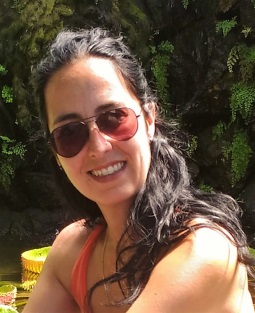
 Technician
RIMAR Department
Motax Core Facility
Tel. +39 081 5833508
e-mail rosanna.guglielmo(at)szn.it
https://scholar.google.it/citations?hl=it&user=6EyM_zEAAAAJ
Short CV
Born in Messina in 1976, she graduated in Natural Sciences in 1999 and obtained a Ph.D. in Environmental Sciences: Marine Environment and Resources in 2004. Her doctoral research focused on the seasonal variability of macrozoobenthic communities associated with the invasive alga Caulerpa taxifolia in the Strait of Messina.
During her academic career, she carried out laboratory activities at the Benthos Laboratory of the Ecology and Taxonomy of Benthos and Plankton Section, as well as at the laboratories of the T.A.R.G.E.T. Section (Environmental Protection – Resources and Land Management) at the University of Messina.
Since 2019, she has been employed at the Stazione Zoologica Anton Dohrn (SZN), where she currently holds the position of CTER (Technical Research Collaborator), Level VI. Her professional activity focuses on the study of benthic communities, with particular attention to polychaete fauna (both benthic and pelagic), applying classical taxonomic methods and molecular techniques, including DNA barcoding.
She actively collaborates with the Marine Organisms Taxonomy (MOTax) Service of the Stazione Zoologica Anton Dohrn in Naples and is included in the Marine Strategy Experts Short List of CoNISMa (National Interuniversity Consortium for Marine Sciences). She has participated in numerous research projects and has long been responsible for the analysis of benthic samples within the Ischiagas environmental monitoring programme.
Tasks
My professional profile integrates scientific research support with operational laboratory management. My research activity focuses on the spatio-temporal variability of soft-bottom benthic community diversity, with a specific emphasis on polychaetes, through the qualitative and quantitative analysis of benthic samples collected within institutional projects and environmental monitoring programs. My expertise spans from sorting to taxonomic identification at the Lowest Possible Taxon (LTP) level, utilizing integrated methodological approaches (classical taxonomy and molecular techniques) and environmental data analysis. In parallel, I oversee laboratory efficiency by managing workspace organization, equipment maintenance, and staff training, complemented by scientific outreach activities during workshops and summer schools. Since 2022, I have also served as the local contact for the Consip Framework Agreement.
Research Interests
My research support activity primarily focuses on the study of biodiversity variation in soft-bottom benthic communities, with particular emphasis on polychaete fauna, using an integrated methodological approach that combines both classical and molecular techniques.
Benthic communities—composed largely of sedentary organisms with relatively long life cycles—represent true biological archives, as they are capable of recording environmental alterations over medium- and long-term temporal scales. They function as decomposers and recyclers of organic matter, thereby contributing to the reduction of eutrophication; they bioturbate sediments, improving seabed oxygenation; they constitute a food source for numerous fish species; and they contribute to mitigating ocean acidification through nutrient uptake and CO₂ absorption.
In marine habitats, polychaetes are among the most represented groups in terms of both abundance and diversity. Owing to several distinctive biological and ecological traits, they are frequently used as bioindicators in environmental quality assessments. They provide crucial information on the health and integrity of marine ecosystems and respond rapidly to environmental stressors—such as pH fluctuations and contamination—through changes in community structure, mortality rates, or shifts in functional traits.
Taxonomic and ecological studies make it possible both to define their trophic and functional role within the ecosystem and to identify indicator species associated with specific environmental conditions.
Publications
1. Hay Mele B, Russo L, Crocetta F, Gambi C, Dell’Anno A, Danovaro R, Guglielmo R, Musco L, Patti FP, Riginella E, Tangherlini M, Ribera D’Alcalà M, D’Alelio D. Ecological assessment of anthropogenic impact in marine ecosystems: The Case of Bagnoli Bay. Marine Environmental Research 2020; 158: 104953.
2. Guglielmo R, Bergamasco A, Minutoli R, Patti FP, Belmonte G, Spanò N, Zagami G, Bonanzinga V, Guglielmo L, Granata A. The Otranto Channel (South Adriatic Sea), a hot-spot area of plankton biodiversity: pelagic polychaetes. Scientific Reports 2019; 9: 19490.
3. Donnarumma L, Appolloni L, Chianese E, Bruno R, Baldrighi E, Guglielmo R, Russo GF, Zeppilli D, Sandulli R. Environmental and Benthic Community Patterns of the Shallow Hydrothermal Area of Secca Delle Fumose (Baia, Naples, Italy). Frontiers in Marine Science 2019; 6: 685.
4. Scipione MB, Lo Brutto S, Cirino P, Di Capua I, Guglielmo R, Patti FP, Sarno D. A network of Italian amphipodologists in the frame of MOTax (Marine Organisms Taxonomy) at the Stazione Zoologica Anton Dohrn di Napoli (Italy). Biodivers J. 2017; 8(2): 661-663.
5. Corriero G, Pierri C, Accoroni S, Alabiso G, Bavestrello G, Barbone E, et al. Ecosystem vulnerability to alien and invasive species: a case study on marine habitats along the Italian coast. Aquat Conserv: Mar Freshw Ecosyst. 2016; 26(2): 392-409.
6. Guglielmo R, Gambi MC, Granata A, Guglielmo L, Minutoli R. Composition, abundance and distribution of holoplanktonic polychaetes within the Strait of Magellan (southern America) in austral summer. Pol Biol. 2014; 37: 999-1015.
7. Lorenti M, Gambi MC, Guglielmo R, Patti FP, Scipione MB, Zupo V, Buia MC. Soft-bottom macrofaunal assemblages in the Gulf of Salerno, Tyrrhenian Sea, Italy, an area affected by the invasion of the seaweed Caulerpa racemosa var. cylindracea. Mar Ecol -Evol Persp. 2011; 32(3): 320-334.


