



 Bandi e ConcorsiBandi di gara e contratti (al 12 luglio 2017)Contratti di servizi e fornitureBandiApertiITALIANOPagine
Pagine
TRASForMARE- Technology TRAnSfer Office For MAnagement of Research Exploitation results


Denominazione del progetto: Technology TRAnSfer Office For MAnagement of Research Exploitation results
Acronimo: TRASForMARE
CUP : B67G22000780006
Durata del progetto: Dal 01/07/2023 al 30/06/2025
Il progetto TRASForMARE – Technology TRAnSfer Office For MAnagement of Research Exploitation results, finanziato nell’ambito del PNRR, è finalizzato al potenziamento delle attività di trasferimento tecnologico della Stazione Zoologica Anton Dohrn (SZN), con l’obiettivo di rafforzare la valorizzazione dei risultati della ricerca e favorirne il trasferimento verso il sistema produttivo.
il progetto si inserisce nella strategia di sviluppo del Grant and Innovation Office (GIO), mirando a consolidare e ampliare il portafoglio di proprietà industriale dell’Ente, migliorare i processi di tutela brevettuale e intensificare le interazioni con imprese e stakeholder, attraverso l’inserimento di figure specializzate (Knowledge Transfer Manager) e l’implementazione di attività strutturate di scouting, promozione e networking.
Le principali attività
- Attività di scouting e supporto ai processi di brevettazione e di gestione del portafoglio brevetti.
- Promozione e valorizzazione dei risultati della ricerca.
- Azioni di sensibilizzazione sul tema della tutela della proprietà intellettuale
- Supporto ai ricercatori nella presentazione dei risultati della ricerca suscettibili di protezione e/o di consulenza per l’avvio di percorsi imprenditoriali
- Partecipazione ad eventi formativi.
- Organizzazione di incontri per la diffusione della cultura brevettuale e per la valorizzazione dei risultati della ricerca.
- Organizzazione di visite presso le PMI del territorio finalizzate al potenziamento e alla valorizzazione delle collaborazioni tra SZN e mondo imprenditoriale e a fornire un servizio gratuito di diagnostica e valorizzazione dei titoli di proprietà industriale.
Le attività svolte hanno contribuito ad un progressivo rafforzamento delle competenze interne e una crescente sensibilità dell’Ente verso le tematiche del trasferimento tecnologico.
Studio e Monitoraggio delle Praterie di Posidonia oceanica 2026
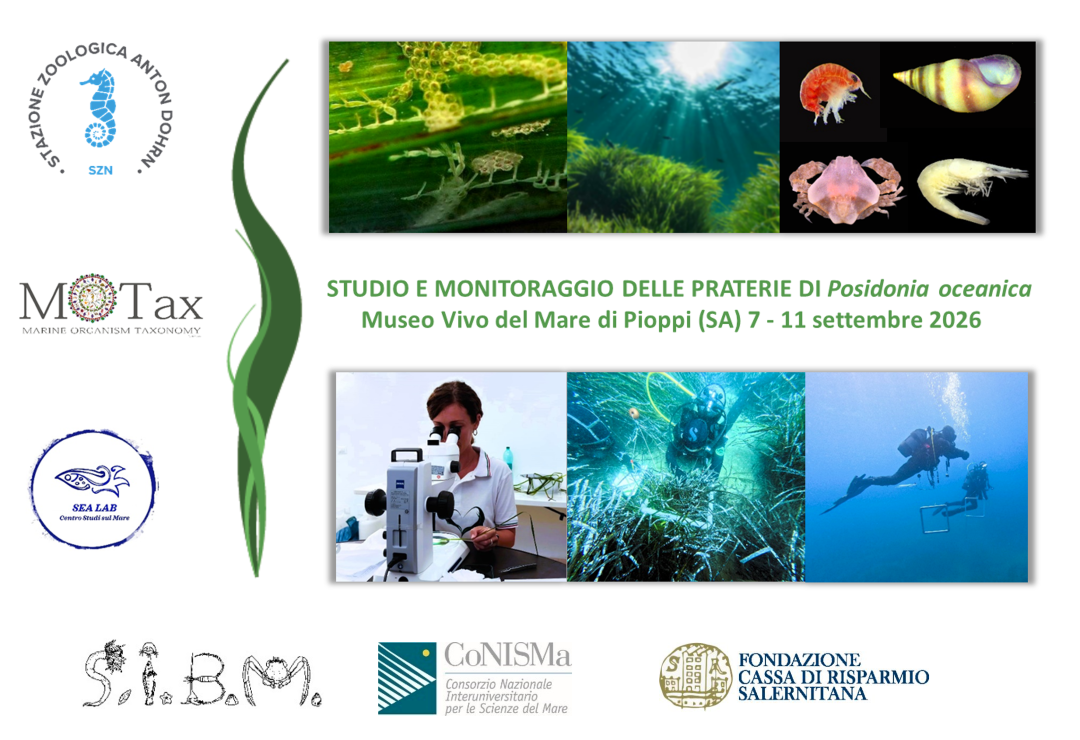
L’Unità MOTax (Marine Organism Taxonomy), in collaborazione con il Museo Vivo del Mare “MUSea”, organizza la sesta edizione della Summer School: “Studio e Monitoraggio delle Praterie di Posidonia oceanica”.
Il corso prevede lezioni frontali, immersioni subacquee ed attività di laboratorio; è rivolto a chi è in possesso di un’adeguata formazione naturalistica e che intenda acquisire le conoscenze necessarie per svolgere analisi sulle praterie di Posidonia oceanica: dalla stesura del piano di campionamento a tutte le attività in mare, dalle analisi di laboratorio alle attività di elaborazione statistica dei dati.Identificazione dei limiti della prateria, misure di densità, campionamento, fenologia, studio degli epifiti e della fauna associata, queste alcune delle attività che svolgerà il corsista acquisendo manualità e metodologie per il monitoraggio delle praterie.
Novità del 2026 è l’introduzione di un modulo sulla tecnica di restauro della prateria di Posidonia oceanica.
La Summer School si prefigge l’ulteriore obiettivo di formare i partecipanti all’applicazione della metodologia PREI, Posidonia Rapid Easy Index, strumento metodologico d’indagine dello stato delle praterie di Posidonia oceanica per l’implementazione territoriale delle Direttive Comunitarie Direttiva Quadro Sulle Acque (2000/60/CE) e Direttiva Strategia Marina (2008/56/CE), ISPRA.
Il corso, diretto dal dott. Luigi Valiante direttore scientifico del Museo Vivo del Mare, si avvale della collaborazione della Stazione Zoologica Anton Dohrn con la partecipazione del dott. Gabriele Procaccini Dirigente di Ricerca del Dipartimento Ecologia Marina Integrata e del dott. Paolo Fasciglione dell’Unità specializzata in tassonomia MOTax.
La durata è di 5 giorni, le lezioni frontali e le attività di laboratorio si svolgono presso il Museo Vivo del Mare “MUSea” che ha sede al Palazzo Vinciprova di Pioppi (Pollica, SA), mentre le attività di campo (immersioni subacquee) saranno effettuate nell’Area a Tutela “la Punta” di Pioppi, nel Parco Nazionale del Cilento, Vallo di Diano e degli Alburni.
Lezioni frontali
● Fisiologia, ecologia, ruolo ecosistemico, gestione della fascia costiera, conservazione
● Resilienza e capacità di adattamento
● Analisi dei dati, applicazione dell’indice PREI con dimostrazioni pratiche
Immersioni subacquee sulla prateria
● Identificazione dei descrittori fisiografici (tipologia prateria e sua distribuzione, identificazione limiti superiore ed inferiore e tipologia)
● Descrittori strutturali (misure di densità e valutazione dell’indice di copertura)
● Tecniche di campionamento e prelievo dei fasci fogliari
● Campionamento della fauna associata ai rizomi (sorbona)
● Campionamento della fauna vagile associata alle foglie (retino manicato)
● Tecnica di restauro delle praterie di Posidonia oceanica
Attività di laboratorio
● Descrittori morfometrici (fenologia)
● Analisi della comunità epifita
● Studio della fauna vagile
Crediti formativi
• Attestato di partecipazione
• Certificazione di immersioni scientifiche
Docenti
● Luigi Valiante (Museo Vivo del Mare di Pioppi)
● Gabriele Procaccini (Stazione Zoologica Anton Dohrn Napoli)
● Paolo Fasciglione (Stazione Zoologica Anton Dohrn Napoli)
● Michele Scardi (Università degli Studi di Roma Tor Vergata)
Quota di partecipazione
450,00 euro, la quota comprende:
5 gg di corso presso il Museo Vivo del Mare di Pioppi (Palazzo Vinciprova):
● attività scientifiche in immersione sulla prateria di Posidonia oceanica;
● attività di laboratorio presso le sale attrezzate del Centro Velico Anemos di Pioppi;
● lezioni frontali da parte del personale scientifico;
● materiale didattico;
● cena sociale/coffee break
● alloggio in foresteria, per i primi 10 iscritti, grazie alla sponsorizzazione CARISAL
Organizzatori: Paolo Fasciglione (SZN), Luigi Maria Valiante (MUSea)
Info e domanda di partecipazione alla summer school
● www.centrostudisealab.it
● Questo indirizzo email è protetto dagli spambots. È necessario abilitare JavaScript per vederlo.
● Questo indirizzo email è protetto dagli spambots. È necessario abilitare JavaScript per vederlo.
Fine iscrizioni: 15 luglio 2026
Conferma partecipazione e pagamento: 31 luglio 2026
Il numero dei partecipanti massimo è di 12 persone.
A causa del gran numero di richieste verrà effettuata una selezione basata su CV e motivazioni; quindi, è necessario allegare alla domanda il proprio CV.
I primi 10 avranno l’alloggio gratuito in foresteria.
Accettata la partecipazione, entro 10 giorni dovrà essere versata la quota di partecipazione.
Scibelli Sebastiano
 Post Doc
Dipartimento di Biologia ed Evoluzione degli Organismi Marini
Stazione Zoologica Anton Dohrn
Villa Comunale
80121 Napoli - Italia
e-mail: Questo indirizzo email è protetto dagli spambots. È necessario abilitare JavaScript per vederlo.
Interessi di Ricerca
La mia ricerca integra biologia molecolare, genomica comparata e bioinformatica funzionale per comprendere come i pathway lipidici bioattivi contribuiscano alla fisiologia, alle risposte allo stress e alle interazioni ecologiche negli organismi marini. Prima del dottorato, ho sviluppato e testato nuovi sistemi di allevamento per tunicati sia solitari sia coloniali, creando una piattaforma sperimentale per affrontare quesiti di ecologia chimica a livello di organismo e di comunità. In questo contesto, ho studiato le interazioni tra Botryllus schlosseri ed estratti della diatomea bentonica Cocconeis scutellum, ottenendo evidenze preliminari che una molecola nota in natura come induttore di inversione sessuale nel gamberetto Hippolyte inermis possa inibire il settlement larvale di Botryllus, conferendo verosimilmente un vantaggio competitivo attraverso la limitazione dell’accesso al substrato.
Un secondo filone di lavoro, emerso da questi approcci basati sulla coltura, ha riguardato le relazioni ospite–simbionte e ospite–parassita nei tunicati. In particolare, ho analizzato il copepode Pachypygus gibber, precedentemente considerato commensale di Ciona robusta (e di altri tunicati) e le mie osservazioni ne hanno supportato la reinterpretazione come parassita in sensu lato, sulla base di marcati effetti negativi sulla fitness dell’ospite. In condizioni sperimentali, l’infestazione è risultata associata a un forte deterioramento delle fitness della prole, con un collasso del recruitment entro pochi giorni dal settling, evidenziando come associazioni criptiche possano avere conseguenze demografiche sproporzionate nelle popolazioni bentoniche marine.
Durante il dottorato, mi sono focalizzato sulle diatomee come modelli marini trattabili per analizzare la diversità evolutiva e funzionale del pathway delle prostaglandine. Un tema centrale del mio lavoro è il pathway mining: l’identificazione sistematica, la validazione e la contestualizzazione evolutiva degli enzimi correlati alle prostaglandine attraverso genomi e trascrittomi, integrando ricerche di omologia curate, analisi dell’architettura dei domini e inferenza filogenetica. Questo interesse mi ha portato a padroneggiare un’ampia gamma di pipeline bioinformatiche riproducibili, permettendomi di lavorare in modo integrato su risorse RNA-seq e genomiche (dal mapping delle reads e quantificazione dell’espressione fino all’annotazione genomica evidence-based e ab initio) e di sviluppare framework analitici robusti anche in specie marine non-modello.
Combinando genomica comparata e approcci basati sull’espressione, le mie analisi stanno andando oltre le assunzioni canoniche sulla biosintesi delle prostaglandine. In particolare, i risultati attuali stanno contribuendo a raffinare le ipotesi sull’emergenza e la diversificazione della famiglia delle ciclossigenasi (COX), un sistema enzimatico tradizionalmente considerato cruciale per la produzione di prostaglandine, lungo il lineage animale, includendo metazoi a ramificazione precoce. Utilizzando un dataset comparativo ampliato e una rigorosa valutazione dell’ortologia, sto ottenendo evidenze di un ortologo putativo di COX anche in specie selezionate di spugne (Porifera), il che estenderebbe l’emergenza evolutiva inferita di COX a una posizione più profonda nel lineage dei metazoi. In parallelo, il mio lavoro sta convergendo sempre più verso la biologia dei coralli e i potenziali ruoli del pathway delle prostaglandine nella fisiologia e nella simbiosi degli cnidari. Ho avviato primi esperimenti per esplorare la dinamica del pathway durante la rigenerazione del disco orale nell’anemone mediterraneo Anemonia sp., estendendo lo stesso quadro concettuale allo studio del possibile coinvolgimento della segnalazione mediata da prostaglandine nelle interazioni corallo–Symbiodiniaceae, con l’obiettivo a lungo termine di collegare segnalazione lipidica, rigenerazione e omeostasi ospite–simbionte in condizioni di stress ambientale.
Pubblicazioni
Scibelli, Sebastiano. «Species- and strain-specific gene expression of the prostaglandin pathway in Skeletonema marinoi and Thalassiosira rotula.» Doctor of Philosophy (PhD) thesis The Open University, pubblicazione online ad accesso anticipato, 2025. https://doi.org/10.21954/ou.ro.00104497.
Scibelli, Sebastiano, Mirko Mutalipassi, Iole Di Capua, et al. «Parasitic Pachypygus Gibber Poses a Silent Threat to Reproduction and Development in Ciona Robusta». Scientific Reports 15, fasc. 1 (2025): 34594. https://doi.org/10.1038/s41598-025-18125-4.
Zupo, Valerio, Sebastiano Scibelli, Mirko Mutalipassi, et al. «Coupling Feeding Activity, Growth Rates and Molecular Data Shows Dietetic Needs of Ciona Robusta (Ascidiacea, Phlebobranchia) in Automatic Culture Plants». Scientific Reports 10, fasc. 1 (2020): 11295. https://doi.org/10.1038/s41598-020-68031-0.
CON24MMANG ISPRA D6 03
Comunità epimegabentoniche: Studio delle comunità epimegabentoniche sottoposte a perturbazioni fisiche
Durata: 22/11/2024 – 30/11/2026
Responsabile scientifico SZN: Maria Cristina Mangano
Nell'ambito dell'accordo attuativo della Strategia Marina (Direttiva 2008/56/CE), la convenzione ISPRA Allegato Tecnico D6-03 disciplina la collaborazione scientifica tra ISPRA e la Stazione Zoologica Anton Dohrn (SZN) per lo "Studio delle comunità epimegabentoniche sottoposte a perturbazioni fisiche". L'obiettivo centrale è il monitoraggio e la valutazione dell'integrità dei fondali marini (Descrittore 6), con un focus specifico sull'impatto che le attività di pesca esercitano su queste comunità bentoniche vulnerabili.
Obiettivi
Il progetto si sviluppa in tre fasi operative.
1. “Sviluppo metodologico” che vede la SZN impegnata in un Gruppo di Lavoro di Esperti Nazionali. Le attività principali includono: la definizione di protocolli metodologici standardizzati per indagare le comunità sottoposte a perturbazioni da pesca; l'organizzazione di due incontri tecnico-scientifici per sviluppare tali metodi e un incontro finale per illustrare i risultati della standardizzazione.
2. “Campagne in mare e analisi” che è il cuore operativo del progetto. La SZN organizzerà ed eseguirà 5 campagne in mare nel Mar Tirreno. Le attività specifiche comprendono: Pianificazione logistica e prelievo dei campioni secondo i protocolli definiti nella Fase A; Analisi dei campioni (sia a bordo che in laboratorio) e verifica degli standard di qualità; Analisi congiunta dei dati raccolti tra SZN e ISPRA.
3. "Reporting e Sintesi Finale” L'ultima fase, è dedicata alla stesura di un report tecnico-scientifico completo che raccolga tutti i risultati oggetto della convenzione e delle attività sperimentali.
TecMAReco
Tecnologie ad alta risoluzione per il monitoraggio di rifiuti marini e rilevamento di effetti sugli ecosistemi marini protetti, verso un sistema di rilevamento rapido transfrontaliero
Programma: Interreg VI-A Italia-Malta
Durata: 02/05/2025 – 02/11/2027
Nel contesto del programma di cooperazione transfrontaliera Interreg V-A Italia-Malta, il progetto TecMAReco affronta la sfida critica della plastica e dei rifiuti marini (marine litter) che minacciano la salute degli ecosistemi dell’area transfrontaliera tra Sicilia e Malta. L'iniziativa si focalizza sull'integrazione di sistemi di telerilevamento e monitoraggio in-situ ad alta risoluzione per identificare in modo mirato l'accumulo di rifiuti e analizzarne l'impatto biologico sulle aree marine protette. L'obiettivo è creare un sistema di allerta rapido e condiviso tra Italia e Malta, standardizzando i protocolli di rilevamento transfrontaliero dai fiumi in mare, attraverso approcci partecipativi di citizen science, e attraverso la creazione di una rete di portatori di interesse e fasi di test di soluzioni di riuso dei materiali plastici, per una governance coordinata e tempestiva delle emergenze ambientali.
Obiettivi
Il progetto si propone di sviluppare un framework tecnologico e metodologico per il monitoraggio precoce dei rifiuti marini e la protezione degli habitat sensibili.
Per il raggiungimento di tali traguardi, l'iniziativa si articola nelle seguenti linee d'azione:
Sviluppo di sistemi di monitoraggio ad alta risoluzione: implementazione di tecnologie ottiche e acustiche avanzate (sensori satellitari, droni e ROV) per il rilevamento, la mappatura e la quantificazione dei rifiuti marini in aree marine protette e siti Natura 2000;
Valutazione degli impatti sul funzionamento degli ecosistemi: studio approfondito degli effetti dei contaminanti associati ai rifiuti sugli organismi marini (bioindicatori) e sugli habitat vulnerabili, per quantificare il danno ecologico reale;
Creazione di un sistema di rilevamento rapido (Early Warning): implementazione di una piattaforma transfrontaliera italo-maltese per lo scambio di dati in tempo reale, volta a facilitare interventi di mitigazione, riuso e rimozione coordinati tra le autorità competenti;
Armonizzazione dei protocolli: standardizzazione delle metodologie di campionamento e analisi tra i partner italiani e maltesi per garantire la comparabilità dei dati e la creazione di linee guida comuni per la gestione dei rifiuti marini (da terra a mare);
Trasferimento tecnologico e sensibilizzazione: formazione del personale tecnico delle agenzie ambientali e coinvolgimento degli stakeholder locali (pescatori, ONG e gestori di aree protette), cittadini in attività di citizen science e beach cleaning, per una protezione sostenibile e condivisa del patrimonio marino.
Coordinatore: Stazione Zoologica Anton Dohrn, Sicily Marine Centre
Responsabili scientifici SZN: Maria Cristina Mangano, Claudio Berti
Partner:
University of Malta, Malta
Università degli Studi di Palermo, Italia
ARPA Sicilia - Agenzia Regionale per la Protezione dell'Ambiente, Italia
Università degli Studi di Catania, Italia
South Side s.r.l., Italia
Zibel ONG, Malta
Regione Siciliana - Dipartimento della Pesca Mediterranea, Italia

SPREAD
Unraveling environmental and anthropogenic factors ShaPing the snow microbiome and antibiotic REsistome At Dome C (Antarctica)
Programma: Programma Nazionale di Ricerca in Antartide (PNRA)
Durata: 3 Novembre 2025 – 2 Novembre 2027
I contaminanti organici tradizionali ed emergenti hanno sollevato crescenti preoccupazioni a causa della loro persistenza, del loro potenziale di trasporto e della loro tossicità. Le regioni polari sono sistemi eco-ambientali speciali e generalmente utilizzate come importante area di riferimento globale. L'aumento delle attività umane e della presenza in Antartide può avere un impatto notevole su scala locale, generando inquinamento ambientale. Tra gli inquinanti di interesse vi sono i prodotti per la cura personale (ad esempio detergenti, saponi, lozioni, dentifrici, creme solari, profumi e creme idratanti), le microplastiche e i prodotti farmaceutici (ad esempio antibiotici e loro residui, analgesici, antinfiammatori e antidepressivi). Considerando l'efficacia della neve nel catturare gli inquinanti atmosferici, la neve funge da importante serbatoio per la distribuzione degli inquinanti tra le diverse matrici nelle regioni polari (trappola fredda). In particolare, la cattura e la rimobilizzazione degli inquinanti attraverso la deposizione e lo scioglimento della neve in condizioni di cambiamento climatico globale possono aumentare l'impatto fondamentale sullo scambio di inquinanti tra le matrici ambientali. Ciò potrebbe influenzare l'ecologia microbica (biodiversità e ruoli ecologici) negli ecosistemi innevati, ad esempio stimolando lo sviluppo di resistenza agli antibiotici nella neve e la sua diffusione attraverso l'atmosfera e lo scioglimento della neve. Nonostante questi potenziali impatti, l'impatto antropico sul resistoma antibiotico della neve rimane da chiarire. Con SPREAD, campioni di neve sottoposti a diversi livelli di antropogeni
Obiettivi
Gli obiettivi specifici saranno:
- valutare la distribuzione spaziale e le dinamiche temporali dell'intera biodiversità
- valutare la presenza e la diffusione di prodotti per la cura personale, farmaci e microplastiche
- descrivere il resistoma e valutare la diffusione della resistenza agli antibiotici e degli agenti patogeni
- analizzare la risposta delle comunità microbiche ai contaminanti presenti nella neve
- caratterizzare la comunità batterica vitale per la biodiversità e le attività metaboliche
Coordinatore: Angelina Lo Giudice, CNR-ISP
Responsabile scientifico SZN: Carmen Rizzo
Partner:
Consiglio Nazionale delle Ricerche, Istituto di Scienze Polari
Stazione Zoologica Anton Dohrn
Università diPisa
SPILLOVER-MED
Assessing spillover from marine protected areas to adjacent fisheries: Mediterranean and Black Seas
Programma: European project (CINEA/MARE European Commission)
Durata: 01/07/2023 – 30/06/2026
Le aree marine protette (AMP), e in particolare le aree a protezione integrale, possono sostenere le attività di pesca attraverso lo spillover di biomassa ittica verso le zone di pesca adiacenti. Lo spillover si verifica quando popolazioni all’interno delle aree protette esportano giovanili e adulti oltre i confini dell’AMP, con potenziali aumenti delle catture e dei benefici economici. Tuttavia, l’entità e l’efficacia dello spillover sono altamente variabili e dipendono da condizioni ecologiche e gestionali. Tra i fattori chiave figurano ad esempio la dimensione dell’AMP, il livello di enforcement, la continuità degli habitat, la presenza di aree a protezione parziale, la mobilità delle specie e la pressione di pesca lungo i confini. Rafforzare le evidenze scientifiche sui processi di spillover è quindi essenziale per valutare il reale potenziale delle AMP nel conciliare la conservazione della biodiversità con gli obiettivi della pesca.
Obiettivi
L’obiettivo di questo progetto è raccogliere e integrare le informazioni esistenti e acquisire nuovi dati per fornire una panoramica del ruolo che le aree marine protette (AMP) possono svolgere per le attività di pesca locali attraverso gli effetti di spillover nel Mar Mediterraneo e nel Mar Nero. Nel complesso, lo studio contribuirà a migliorare la valutazione dei benefici delle AMP per la pesca locale. Gli obiettivi specifici del progetto sono:
valutare la capacità delle aree a protezione integrale e parziale di esportare biomassa ittica pescabile;
individuare se lo spillover sia mediato da specifiche caratteristiche delle AMP, dai diversi tipi di attività di pesca o dai differenti livelli di sforzo di pesca all’interno delle AMP e lungo i loro confini e/o da caratteristiche delle specie;
identificare AMP con diversi livelli di spillover;
valutare lo spillover ecologico e quello legato alla pesca attraverso due casi di studio nel Mar Mediterraneo.
Lo studio combina: 1) una valutazione su larga scala, basata sulla raccolta di informazioni sullo spillover da dati pubblicati e letteratura grigia in tutto il Mediterraneo e il Mar Nero, e 2) un approccio basato su casi di studio, focalizzato su due casi selezionati nei quali verranno raccolte e analizzate informazioni approfondite sullo spillover ecologico e quello legato alla pesca, al fine di individuare quali caratteristiche delle AMP e delle specie siano i principali fattori che determinano lo spillover.
Coordinatore: Stazione Zoologica Anton Dohrn, Sicily Marine Centre
Responsabile scientifico SZN: Antonio Di Franco
Partners:
Hellenic Center for Marine Research
Interuniversity National Consortium of Marine Sciences
Institute of Oceanology-Bulgarian Academy of Sciences
National Institute for Marine Research and Development “Grigore Antipa”
Institute of Oceanography and Fisheries
Department of Fisheries and Marine Research
Instituto Español de Oceanografia
Centre National de la Recherche Scientifique



PRIMAR
Potential Role of Sea Ice change in controlling Mercury in coastal Antarctic Areas
Programma: Programma Nazionale di Ricerca in Antartide (PNRA)
Durata: 11 luglio 2024 – 11 luglio 2027 (su proroga)
Il mercurio è un oligoelemento tossico presente ovunque nell'atmosfera, dove può depositarsi rapidamente nell'idrosfera o nella criosfera e passare negli ecosistemi vicini. Si ritiene che l'Antartide sia un pozzo durante la notte polare e una fonte durante il giorno polare, anche se questo semplice schema è complicato dalla chimica atmosferica. I radicali dell'ossigeno e del bromo possono aumentare l'ossidazione del mercurio atmosferico in forme ioniche che possono depositarsi più rapidamente. Si sospetta che questi processi di ossidazione siano più rapidi sopra il ghiaccio marino durante la primavera, quando si verifica la cosiddetta esplosione del bromo. Il nostro obiettivo è quello di effettuare misurazioni atmosferiche del bromo e combinarle con le misurazioni dell'ozono e degli NOx già effettuate presso MZS, monitorando al contempo le concentrazioni atmosferiche di mercurio utilizzando uno strumento Tekran 2537X. A complemento di queste misurazioni sul campo, campioni di neve, campioni di ghiaccio, campioni di mare e campioni di aria passivi prelevati in diversi punti ci consentiranno di iniziare a quantificare e collegare i diversi comparti ambientali, i processi di deposito e il ciclo dei metalli. Inoltre, all'interno degli stessi campioni, miriamo a studiare la presenza del mer-operone che codifica la resistenza al mercurio nei batteri, poiché sospettiamo che dopo la rottura del ghiaccio marino, i processi biologici diventino importanti nell'emissione di mercurio dalla superficie del mare. Queste misurazioni, insieme alle traiettorie a ritroso delle masse d'aria utilizzando modelli lagrangiani (FLEXPART e HYSPLIT), dovrebbero aiutarci a dare un contributo valido alla comprensione
Obiettivi
Obiettivo 1) Allestire una stazione per l'analisi continua del mercurio gassoso totale (TGM) nell'aria e la raccolta di aerosol per l'analisi del bromo e del mercurio particolato presso MZS.
Obiettivo 2) Rilevare le concentrazioni di mercurio nella neve, nel ghiaccio marino, nelle acque di fusione glaciale e nelle acque marine superficiali e sotterranee della baia di Tethys e nelle immediate vicinanze della baia di Terra Nova.
Obiettivo 3) Caratterizzazione filogenetica delle comunità batteriche totali e rilevamento molecolare di specifici geni di resistenza all'interno di campioni naturali, e correlazione della loro abbondanza con le concentrazioni di Hg rilevate.
Obiettivo 4) Isolamento di ceppi batterici da campioni di ghiaccio marino, neve e acqua di fusione glaciale per studiare la presenza del mer-operone che codifica la resistenza al mercurio nei batteri.
Obiettivo 5) Studiare le variabili che influenzano le variazioni giornaliere del mercurio nell'atmosfera, l'eventuale rideposizione del mercurio e in quali condizioni, con una stima reale della quantità di mercurio riciclata tra l'aria e il manto nevoso.
Obiettivo 6) Comprendere in che modo e in che misura le variazioni del ghiaccio marino sulla costa possono influenzare il ciclo del mercurio.
Coordinatore: Cairns Warren Raymond Lee, CNR-ISP
Responsabile scientifico SZN: Carmen Rizzo
Partner:
Consiglio Nazionale delle Ricerche, Istituto di Scienze Polari
Stazione Zoologica Anton Dohrn
Università di Perugia
DecarbonyT
Decarbonisation of the fishing fleet in the Mediterranean and Black Sea
“Framework Contract for the provision of scientific advice for the Mediterranean and the Black Sea” FRAMEWORK CONTRACT – EASME/EMFF/2020/OP/0021
Programma: Executive Agency for Small and Medium-sized Enterprises (EASME), EMFAF - European Maritime, Fisheries and Aquaculture Fund
Durata: 01/01/2024 – 10/03/2026
La transizione verso la neutralità climatica rappresenta una sfida cruciale per il settore ittico, oggi fortemente condizionato dall'instabilità dei prezzi del carburante e dalla necessità di ridurre le emissioni. In questo scenario, il progetto DecarbonyT promuove l'innovazione tecnologica nel Mediterraneo e nel Mar Nero, focalizzandosi sull'ottimizzazione delle attrezzature da traino per coniugare sostenibilità ambientale e redditività economica.
Obiettivi
Il progetto punta a tracciare una rotta strategica per il potenziamento delle flotte pescherecce ad alto potenziale. Lo scopo centrale è determinare l'impatto reale dell'impiego di reti a strascico ottimizzate sulla riduzione dei consumi, favorendo così un percorso di decarbonizzazione concreto e misurabile.
Per il raggiungimento di tali traguardi, il progetto si articola in una serie di Subtask suddivisi in un Task di gestione e coordinamento (Task 0) e in quattro Task tecnici (Task 1-4) tra loro strettamente interconnessi:
Task 1 - Consolidamento e diagnosi: analisi delle conoscenze esistenti sui consumi energetici e sulle soluzioni tecnologiche, con l'attuazione di audit energetici per definire i parametri di riferimento (baseline) nelle specifiche combinazioni area/attrezzo;
Task 2 - Monitoraggio: acquisizione di nuovi dati dettagliati per tipologia di pesca (métier);
Task 3 - Supporto decisionale: analisi dei dati raccolti per fornire agli operatori una guida utile a valutare le implicazioni pratiche, in particolare di natura economica, derivanti dall'adozione di diverse soluzioni di efficienza energetica;
Task 4 - Disseminazione: coinvolgimento degli stakeholder e diffusione dei risultati del progetto.
Sito web: https://decarbonyt.eu/
Coordinatore: National Research Council (CNR) – Italia
Responsabile scientifico SZN: Maria Cristina Mangano
Partner:
Stazione Zoologica Anton Dohrn (SZN) – Italia
AquaBioTech Group (ABT) – Malta
Centro Interuniversitario di Biologia Marina ed Ecologia Applicata (CIBM) – Italia
Fondazione COISPA (COISPA) – Italia
Consorzio Nazionale Interuniversitario per le Scienze del Mare (CONISMA) – Italia
Fisheries Research Institute (FRI) – Grecia
Hellenic Centre for Marine Research (HCMR) – Grecia
Institute of Marine Science – Spanish National Research Council (ICM-CSIC) – Spagna
Institute of Oceanography - Spanish National Research Council (IEO-CSIC) – Spagna
Institute of Oceanology – Bulgarian Academy of Sciences (IO-BAS) – Bulgaria
Institute of Oceanography and Fisheries (IOF) – Croazia
National Institute for Marine Research and Development (NIMRD) – Romania
Nisea Società Cooperativa (NISEA) – Italia
University of Thessaly (UTH) – Grecia
WWF Mediterranean (WWF) – Italia
Differens Digital, Marketing, Innovation - Italia


Copyright © 2015 by Stazione Zoologica Anton Dohrn Napoli - Italy
Villa Comunale, 80121 Napoli - Tel.+39 081 5833111 - C.F./P.IVA : IT 04894530635 - PEC: ufficio.protocollo(at)cert.szn.it